Yarn, fabric and craft supply shops
A yarn or fabric shop sells by colourway and dye lot, and fills its knit nights.
Art supply shops
The shop, its staff and its workshop tutors work in one Magpie team.
Créer un compte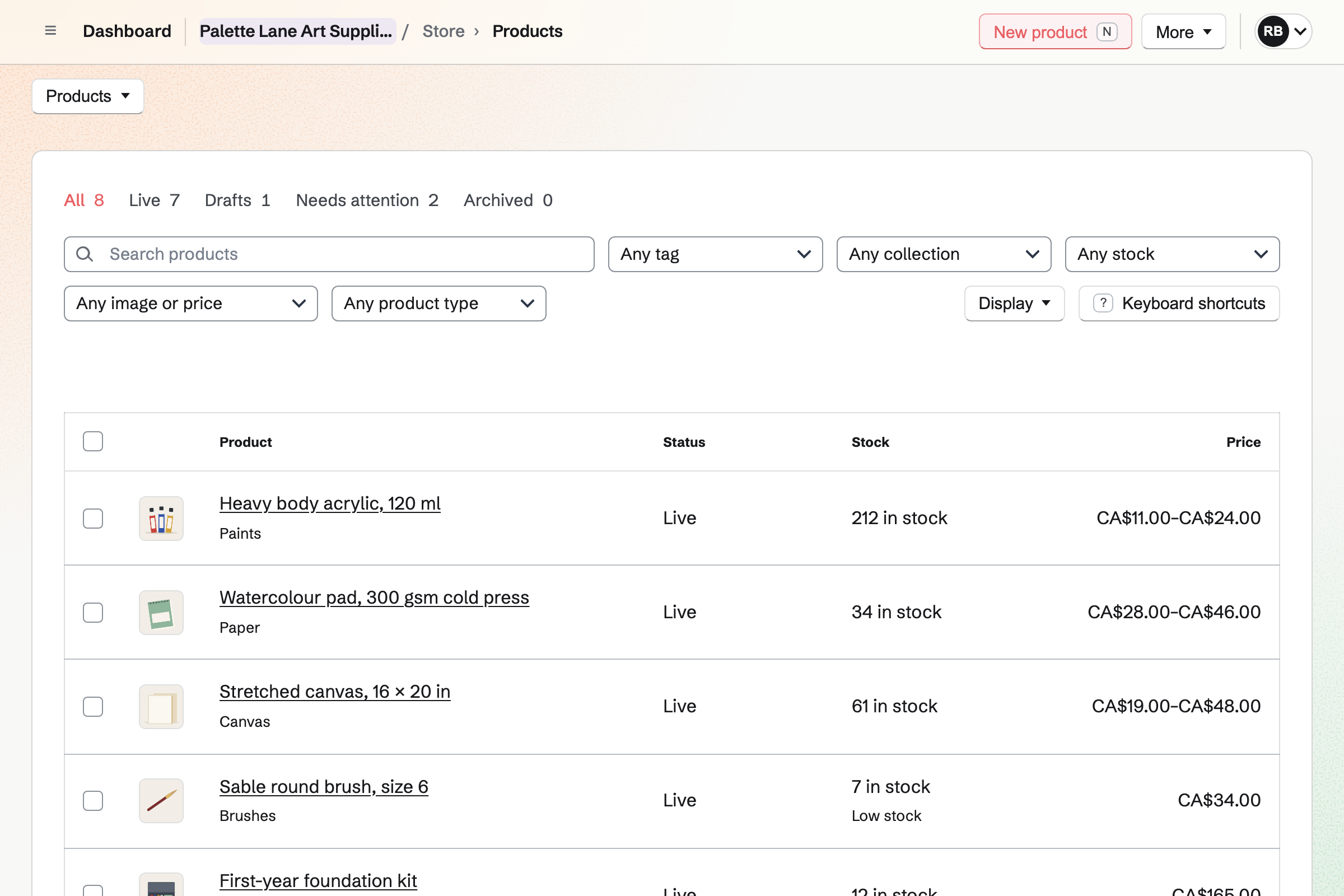
Store is the shop's online shop. A paint's options, such as Colour and Size, make each combination an item. Each has its own price and stock. Open stock sells by the tube, and paper by the sheet or the pad.
A college's foundation kit sells as a bundle of products you already stock. A sale at the counter is recorded as an order.
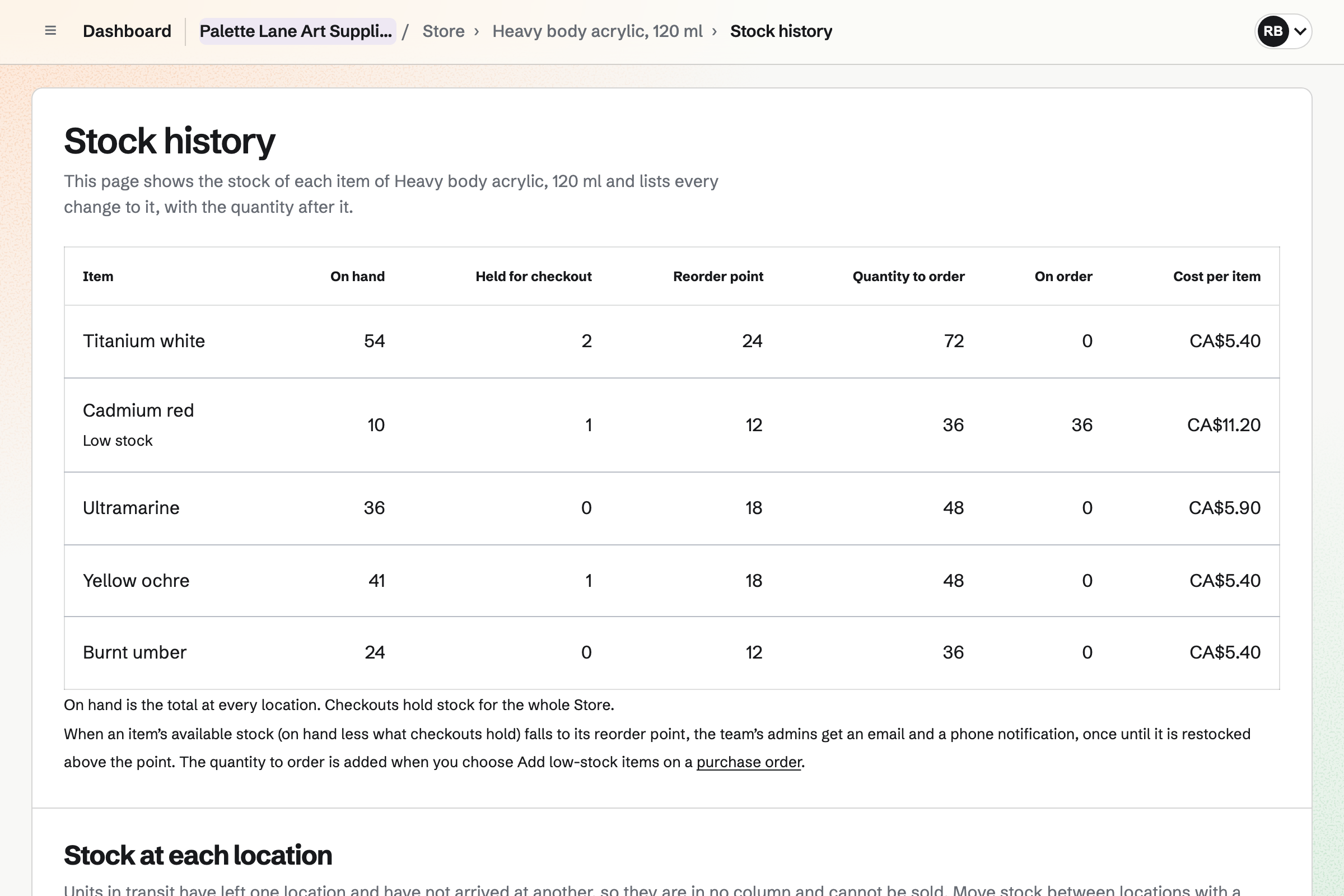
Each item has a reorder point. When a colour falls to it, you get an email. The Stock page lists what is low. A purchase order to the supplier fills itself with the low items.
Receiving the delivery adds the stock at its cost and makes the supplier's bill. Stock can be kept in the shop and a stockroom, and moved between them.
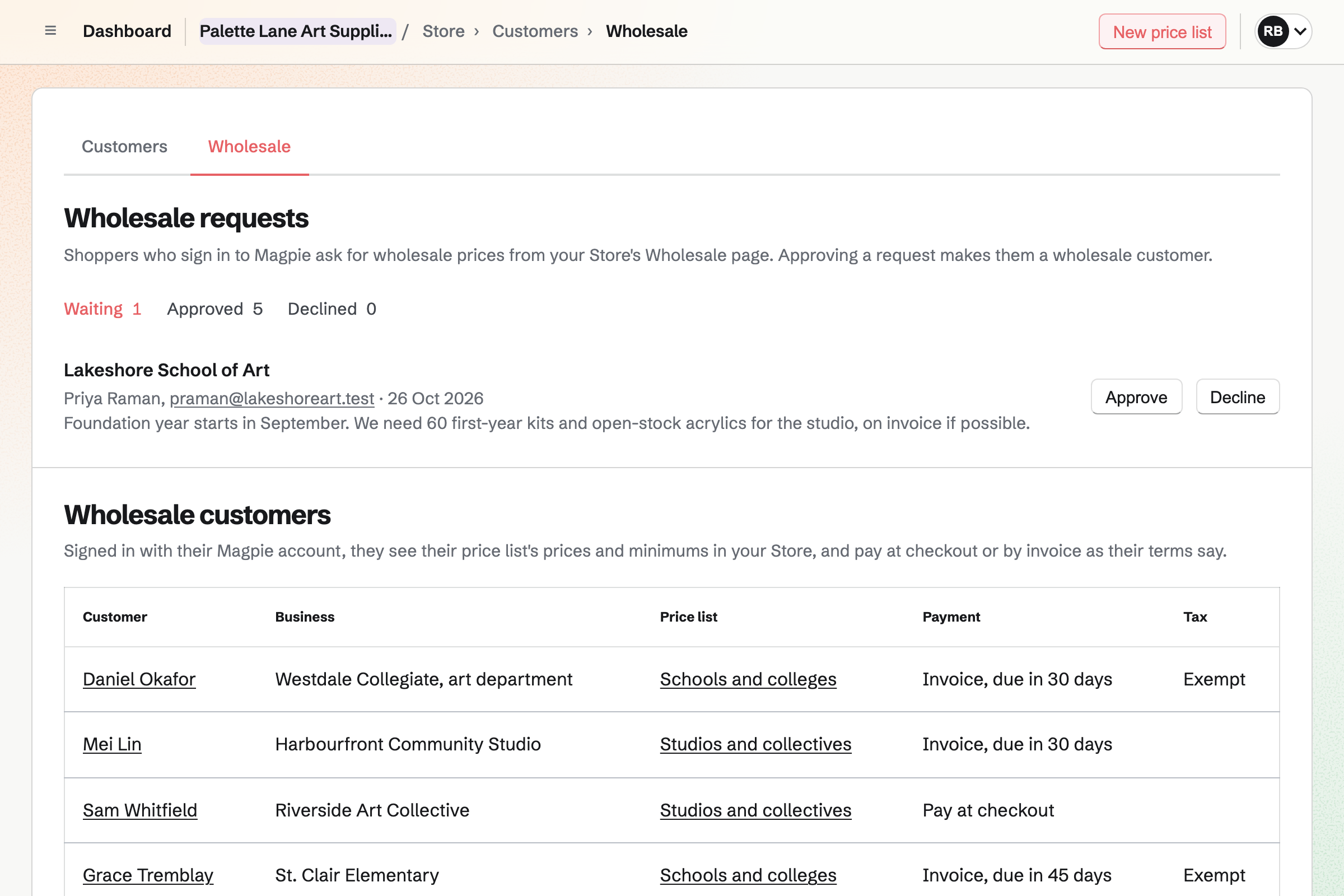
A school's art department is a wholesale customer with its own price list. Its teacher signs in to Magpie and sees the trade prices and minimums. At checkout they choose Pay by invoice, and no card is needed.
The invoice is sent from Invoicing, due on the school's terms, with a Pay online button. You can ship the order before it is paid. The invoice does not count toward your plan's monthly limit.
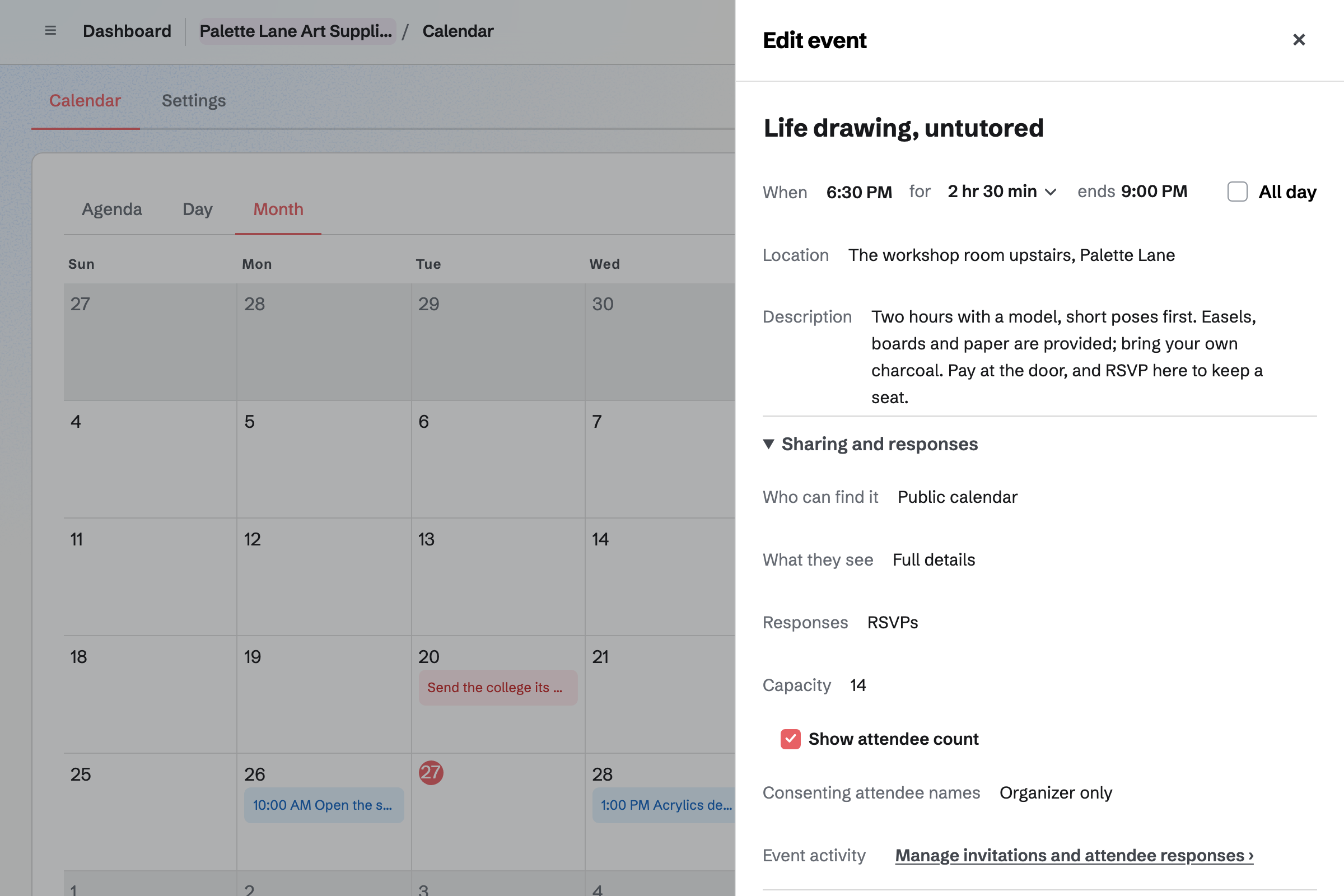
Calendar gives the shop a public calendar of its evenings. You turn on RSVPs and set a capacity. The event's page says when it is full. People RSVP while signed in to Magpie.
The page can show how many people are going. Sharing an event starts a social media post about it.
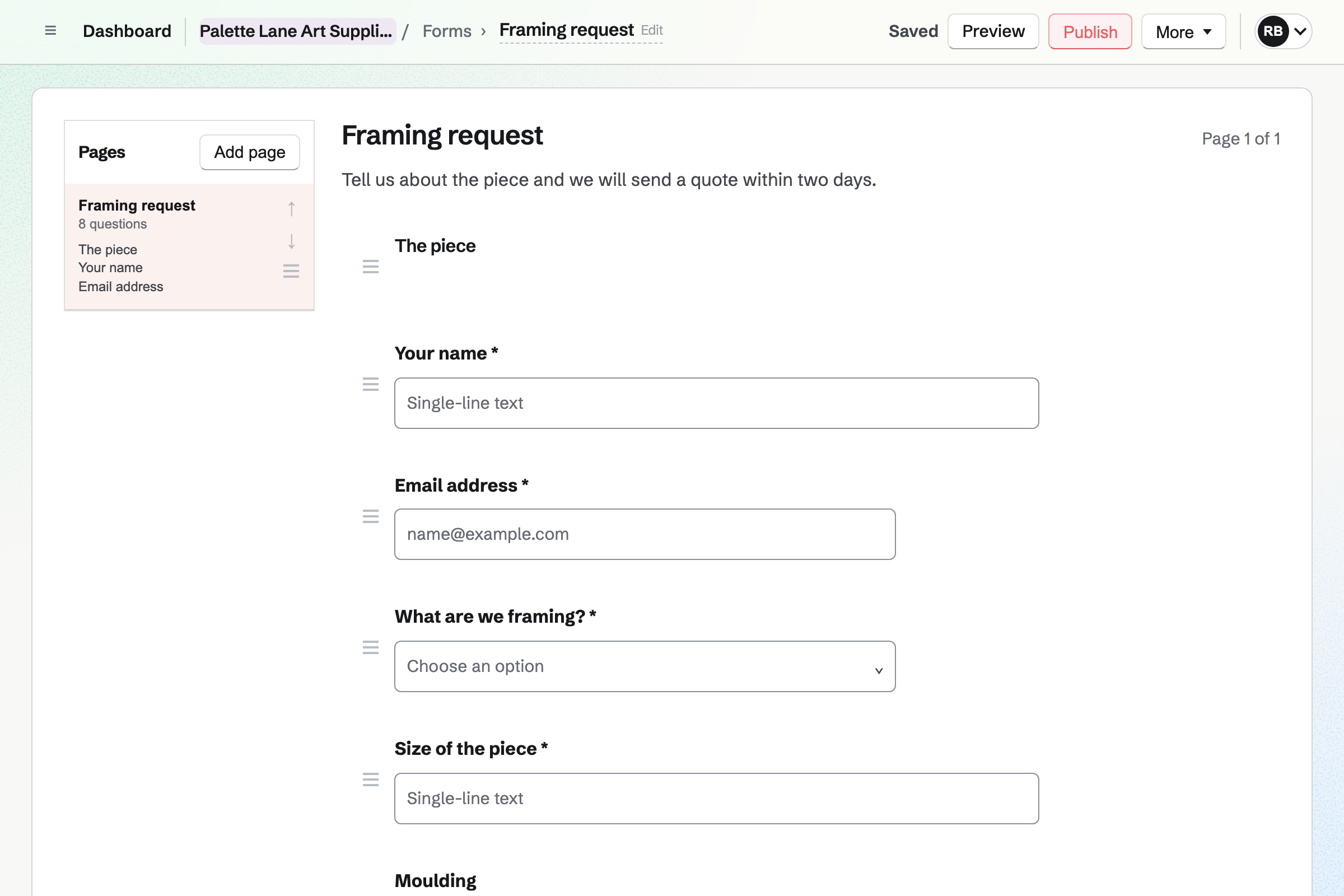
Forms builds a framing request page. It asks for the piece's size, the moulding and the mount. A File question takes a photo of the work. Each request is emailed to you.
A paid Form takes a workshop's fee by card on Stripe's page. Each response shows Paid, and you close the Form when the seats are gone.
Newsletter gives the shop a sign-up page with double opt-in. Checkout can ask buyers to subscribe too. You write each issue, send yourself a test and schedule it.
A sent issue has a web copy, which can start a social media post. The newsletter's page counts the subscribers and the copies delivered.
Each step starts from what the last one made.
A purchase order to the supplier is received, and each colour's stock goes up.
The new range goes live in the online shop, by colour and size.
The newsletter tells subscribers, and a post goes out with the photos.
The brand's demo day goes on the calendar, with RSVPs up to the room's seats.
The art department orders the term's kits at its trade price, on invoice.
The sales, the invoice and the supplier's bill are in the books.
You add each paint with its colours and sizes, and each paper and canvas. Help: Create products, options, and inventory.
You add the brands and wholesalers you order from, with their lead times. Help: Suppliers and purchase orders.
You give each school a price list and invoice terms. Help: Wholesale customers, price lists and pay by invoice.
You add local pickup with the shop's address and times. Help: Collections and shipping.
You connect your Stripe account, so customers can pay by card. Help: Connect Stripe to receive money.
A shop with staff fits the Team plan, one price for up to 25 members. It has room for 5,000 calendar events and higher newsletter limits.
Magpie adds no fee to your shop's sales or to invoices. Stripe's processing fee is taken from each card payment. On a paid Form for a workshop, Magpie's fee is 1% of each payment. Prices are on the Pricing page.
A yarn or fabric shop sells by colourway and dye lot, and fills its knit nights.
A bookshop sells online and at the counter, and fills readings and launches.
A music shop sells instruments, books lessons and takes repairs.
A maker sells their own work from a shop of their own, online and in person.
An artist sells originals and prints, and takes commissions.
A freelance illustrator quotes each job, and sells prints on the side.
Yes. A paint has options, such as Colour and Size, and each combination is an item. Each item has its own price, stock, SKU and barcode. A series can have its own price, so cadmium costs more than ochre.
Yes. A paper's options can be Format, with Sheet and Pad of 20 as choices, and Size. Each is an item with its own price and stock. A customer orders as many sheets as they need.
Yes. A product's page shows each colour's availability. The shop can be filtered to what is in stock. An item with counted stock stops selling at zero. You can let it sell on back order instead.
Yes. A bundle sells several products as one, at its own price. The paints, the brushes, the pad and the board are its parts. Each sale takes stock from every part. When a part runs out, the kit shows as sold out.
Yes. You approve the school as a wholesale customer, with a price list and invoice terms. Its teacher chooses Pay by invoice at checkout. The invoice is emailed with a Pay online button. You can ship before it is paid.
Yes. A discount code takes a percentage or an amount off. It can be limited by dates, a minimum and a number of uses. The student types it in their cart. An automatic discount needs no code at all.
Each item has a reorder point and a quantity to order. When a colour falls to its point, the team's admins get an email. The Stock page lists every low item, furthest below its point first.
Yes. Each supplier has its lead time. A purchase order goes by email or as a PDF, and Add low-stock items fills it. Receiving the delivery adds the stock at its cost, and makes the supplier's bill.
Yes. When an item with counted stock sells out, its product page asks for an email address. Magpie sends one email when it can be bought again. You see how many people are waiting.
Yes. A Form asks for the piece's size, the moulding and the mount. A File question takes a photo of the work. Each request is emailed to you. You send the quote as an invoice, which the customer pays by card.
Yes. You make a Form for the workshop that charges one amount. Each person answers its questions and pays by card on Stripe's page. You close the Form when the seats are gone. Magpie's fee on a paid Form is 1% of each payment.
Yes. You put the evening on the shop's public calendar and turn on RSVPs. You can set a capacity, and the event's page says when it is full. People RSVP while signed in to Magpie, and can sign up from the event's page.
Yes. A public event has its own page with the date, the place and About. The event can be listed on your public calendar. Share event starts a post about it.
Yes. You add local pickup with the shop's address and pickup times. When you mark an order ready, Magpie emails the customer the address, times and any instructions.
Yes. A shipping profile groups the products that ship their own way, such as easels. A cart with a profile's product is offered its rates. Rates can be flat, by weight or by order amount.
You choose New order, pick the items and record how the customer paid. The order is created paid, and the items leave stock.
Yes. A gift card sells fixed amounts and, if you choose, a custom amount. The buyer can have it emailed to someone on a date they pick. The holder spends it in your online shop.
Yes. A QR code opens any address: the product's page, or a video of the technique. A dynamic code can be pointed somewhere else later, so the printed label stays.
Yes. Newsletter gives the shop a sign-up page with double opt-in. Checkout can ask buyers to subscribe too. You write each issue in Markdown, send yourself a test and schedule it. A sent issue has a web copy to share.
Magpie adds no fee to your shop's sales or to invoices. Stripe's processing fee is taken from each card payment. The rest goes to the shop's own Stripe account.
Create a Magpie account and make a team for the shop.