Software startups and small product teams
A software startup plans, builds and ships as a small team.
Hardware startups and electronics makers
A hardware startup works in one Magpie team, from the founders to the first engineers.
Get started free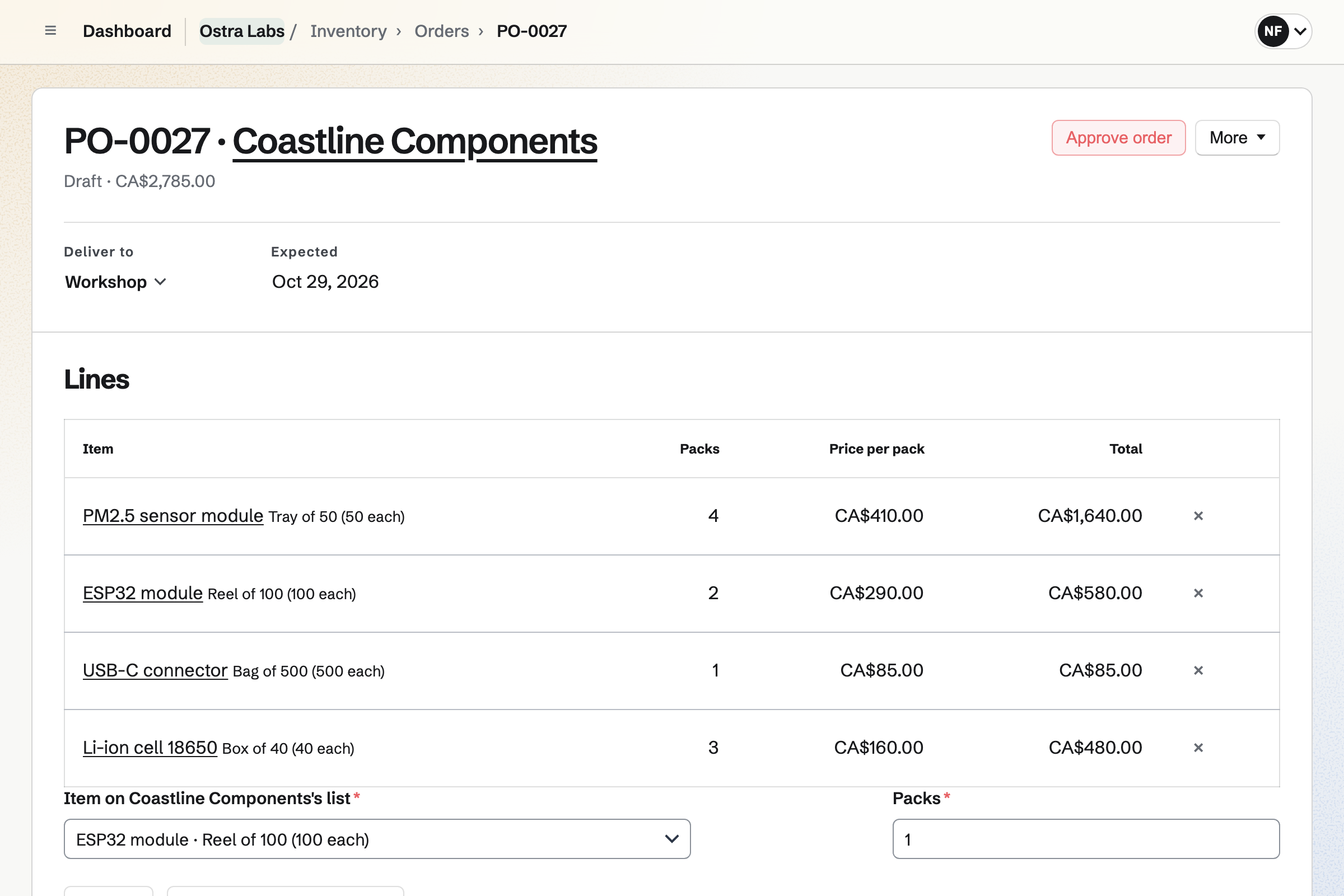
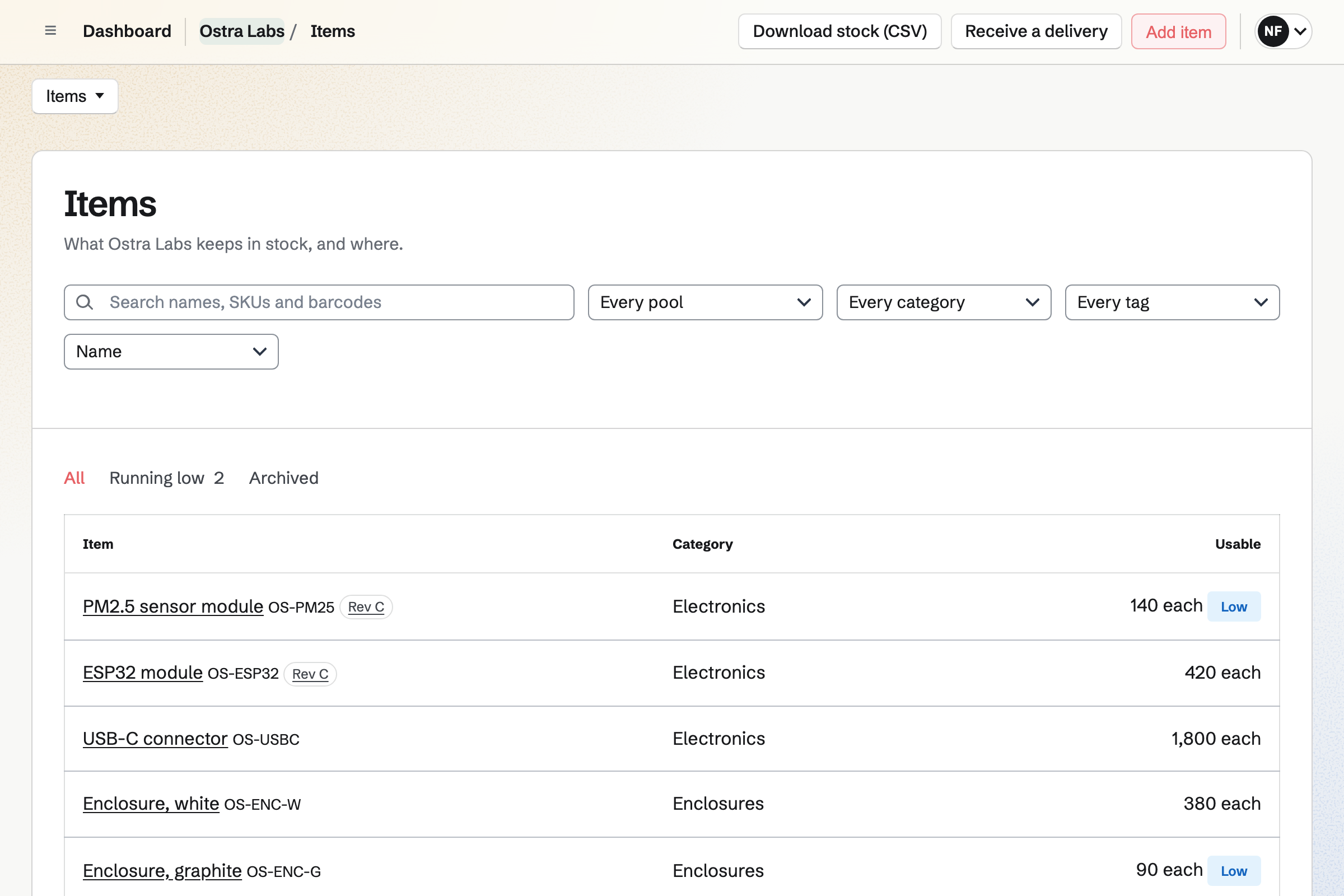
Inventory keeps each component in pools, such as the workshop and your contract manufacturer. A count corrects a pool to what is there.
Draft orders turns low stock into an order for each supplier, in its packs and prices. Orders over a total you set need approval. Short lines on a delivery wait under Differences.
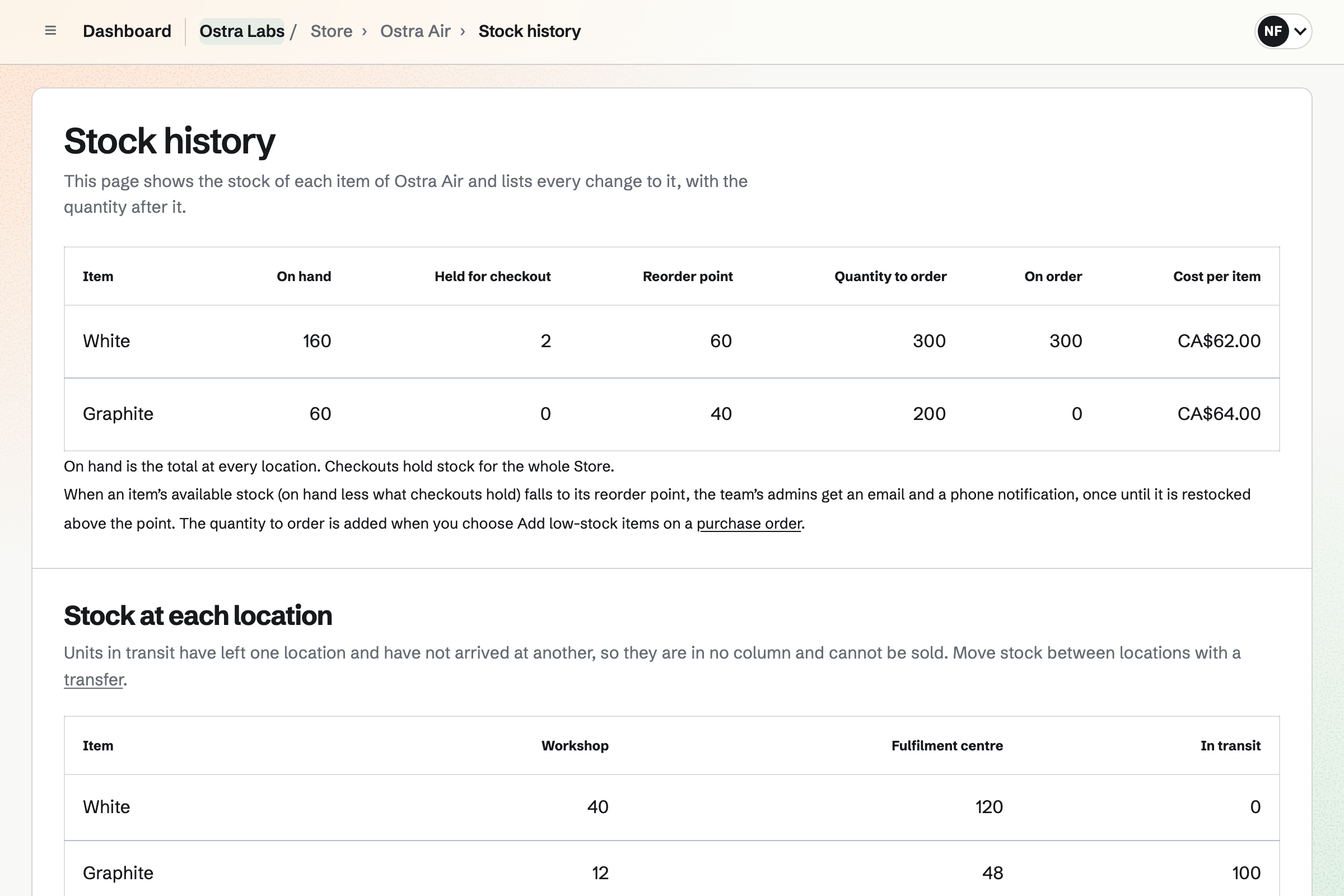
Store sells your device from a shop of your own, with stock kept at each location. A product can keep selling at zero stock, showing the date it will ship.
Pre-orders have their own tab, and payment is taken when the customer orders. Buyers pay into your own Stripe account, with no Magpie fee.
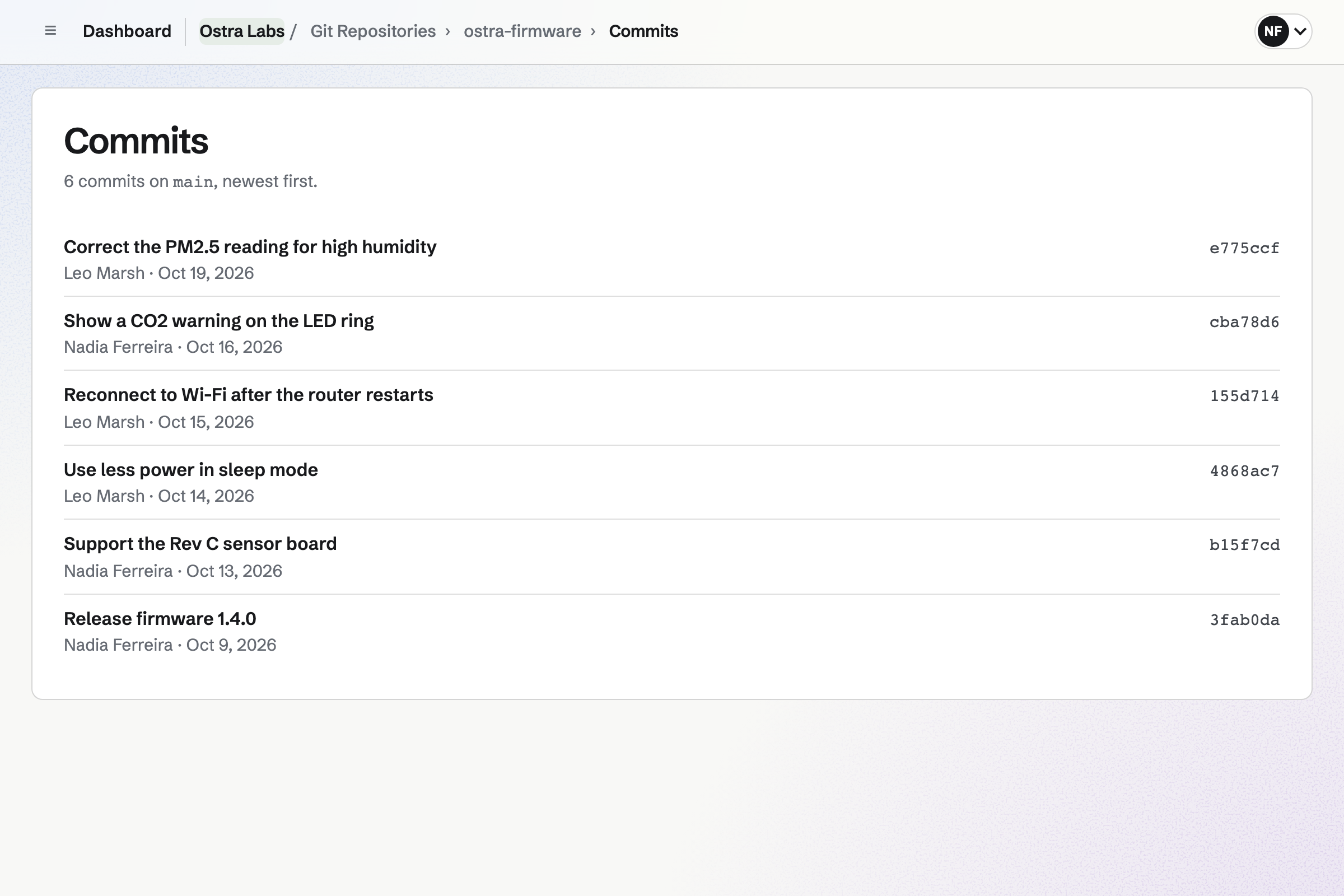
Git Repositories hosts the firmware, private to your team. You clone and push over HTTPS with an access token.
The repository's page shows the files, the README and every commit. A member who can only view can clone and pull, but not push.
Issues tracks bugs and tasks with IDs, priorities and labels. A milestone can hold everything due before the next board revision.
Customers can report a fault on a public form, into Triage. Signed webhooks tell your other tools when an issue changes.
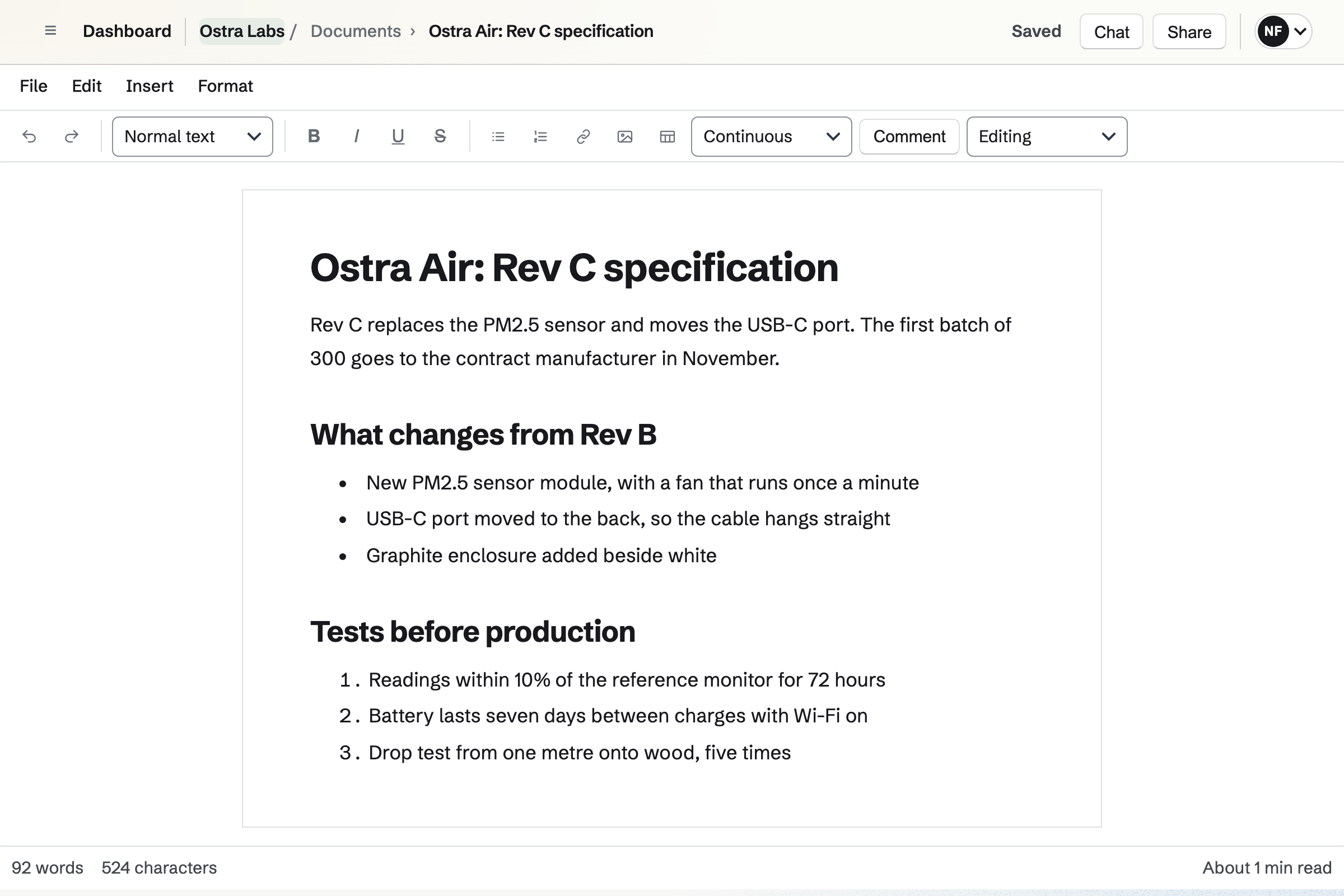
Documents holds the product's specs, test plans and supplier notes. Teammates comment on a line or suggest new wording.
Named versions keep each revision of a spec. A document exports as PDF or DOCX for your contract manufacturer.
Agreements holds standard texts copied word for word, such as Y Combinator's SAFEs and mutual NDAs. You fill in the details, and it goes for signature with the fields placed. The texts are published by others and are not legal advice from Magpie.
The team agrees the revision in a document.
Low components become an order for each supplier.
Parts arrive into stock, and short lines wait under Differences.
The release goes into the repository.
Customers order the batch before it arrives.
The batch lands in stock, and pre-orders ship.
You add each part, with its unit and pools. Help: Keep track of stock.
You list what each supplier sells, in its packs. Help: Order from suppliers and receive deliveries.
You add your device, with pre-orders on. Help: Set up and publish a Store.
You connect your Stripe account, so customers can pay by card. Help: Connect Stripe to receive money.
A hardware startup fits the Team plan, with each person a member of the team. A contract manufacturer you share one document with joins as a guest. A guest takes no member place.
Magpie adds no fee to your shop's sales. Stripe's processing fee is taken from each card payment. Prices are on the Pricing page.
A software startup plans, builds and ships as a small team.
A workshop makes products in batches, with its stock and orders.
An indie developer builds, sells and supports an app alone.
Yes. Each component's stock is kept in pools, such as the workshop and the contract manufacturer. Moving stock between pools is recorded as a move.
Yes. Draft orders turns low stock into an order for each supplier. Each line uses the supplier's packs and prices. You email it, or mark it sent.
Yes. A team admin can require approval for orders at or above a total. An order over it waits until an admin approves it.
Yes. Receiving adds what arrived to stock, with its price and lot. Short, refused and re-priced lines wait under Differences until settled.
Yes. A product can keep selling when its stock reaches zero. It shows the date it is expected to ship. Pre-orders have their own tab.
Yes. A private repository holds the firmware, and members push over HTTPS with an access token. The page shows every commit.
Yes. A public form takes reports into Triage, with an optional email. You accept each one into a project, such as the next revision.
Yes. Agreements has Y Combinator's SAFEs, copied word for word. You fill in the terms and send it for signature. The texts are not legal advice.
Yes. Accounting keeps double-entry books, with Store sales and Stripe payouts posted automatically. You import bank statements as CSV files.
Yes. Hiring gives the role its own page and application form. Applicants move through your stages, and interviewers rate them on scorecards.
Create a Magpie account and make a team for the company.