Newsletter writers
A newsletter writer sends each issue to free and paying readers.
Local news sites, zines and small publications
A small publication works in one Magpie team, with a freelancer invited to their own story. Your podcast is run from one person's account.
Get started free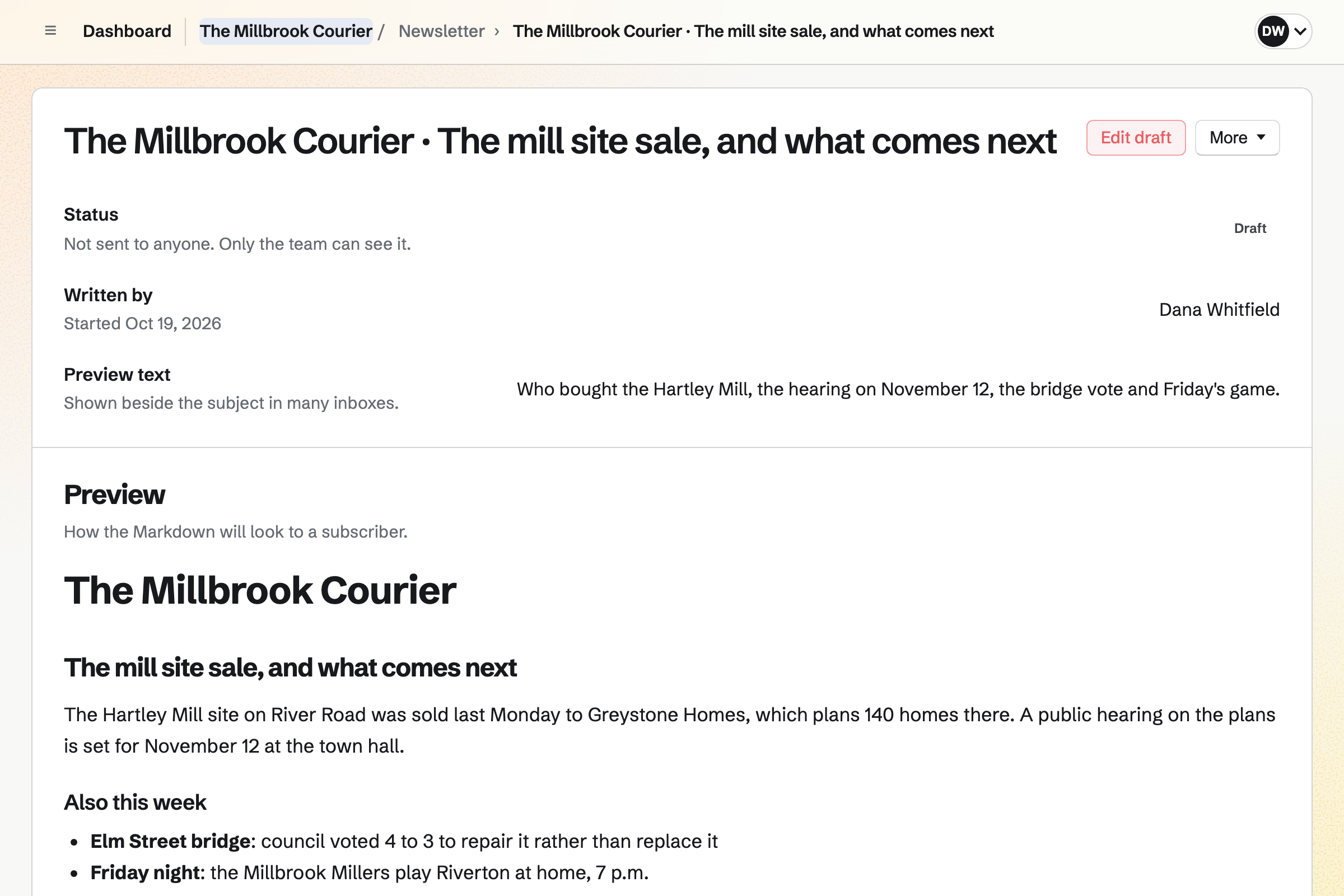
Newsletter sends each edition by email. Readers sign up on its page with double opt-in. With web copies on, each edition has its own page, listed with past editions.
You write in Markdown, send yourself a test and schedule the edition. You can bring your list from Substack, Mailchimp or a CSV file.
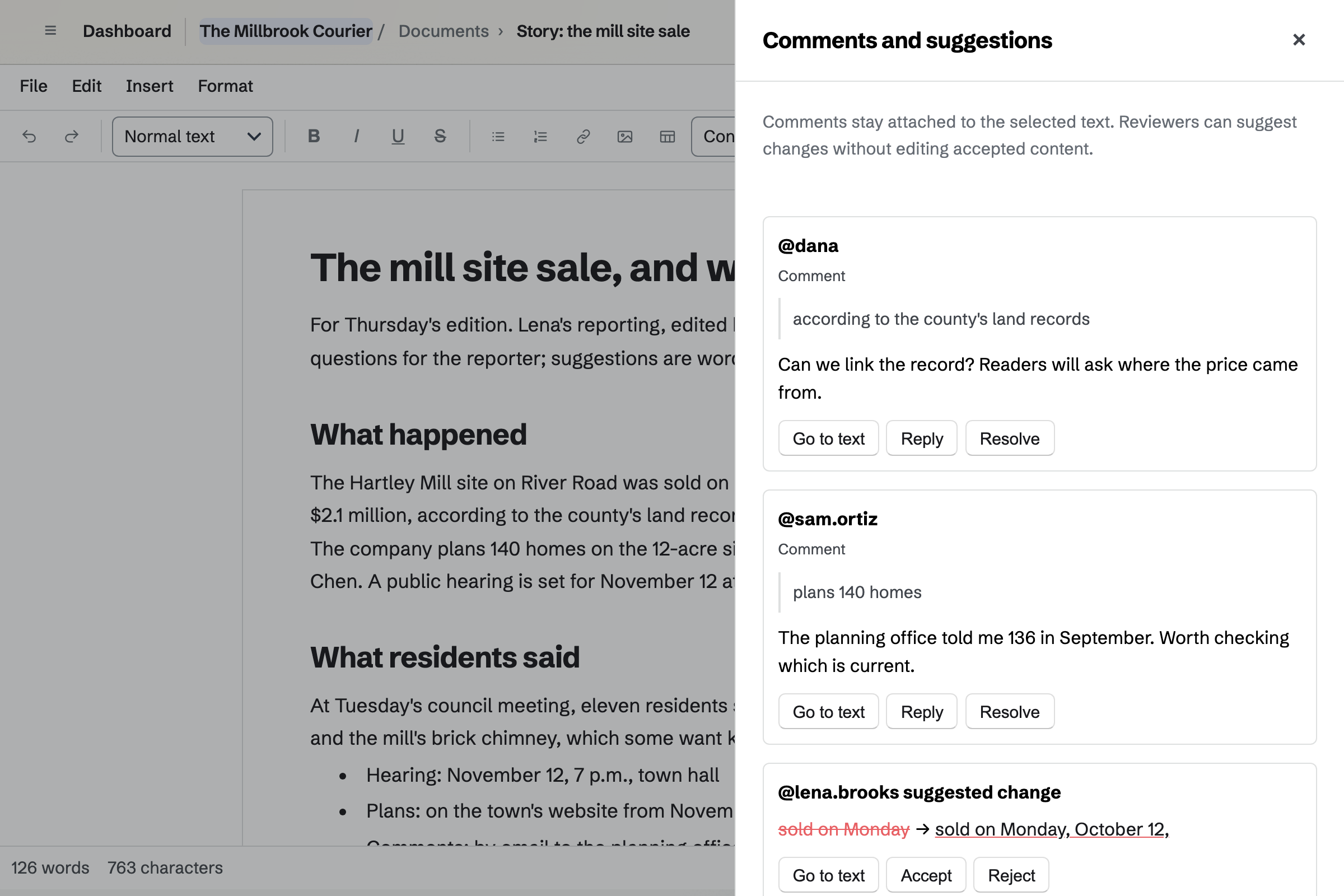
Documents is where stories are written and edited. You comment on a line, or suggest new wording the reporter can accept. A freelancer can review their own story as a guest.
Named versions keep each draft, such as the edit sent back to the reporter. A story exports as DOCX or PDF.
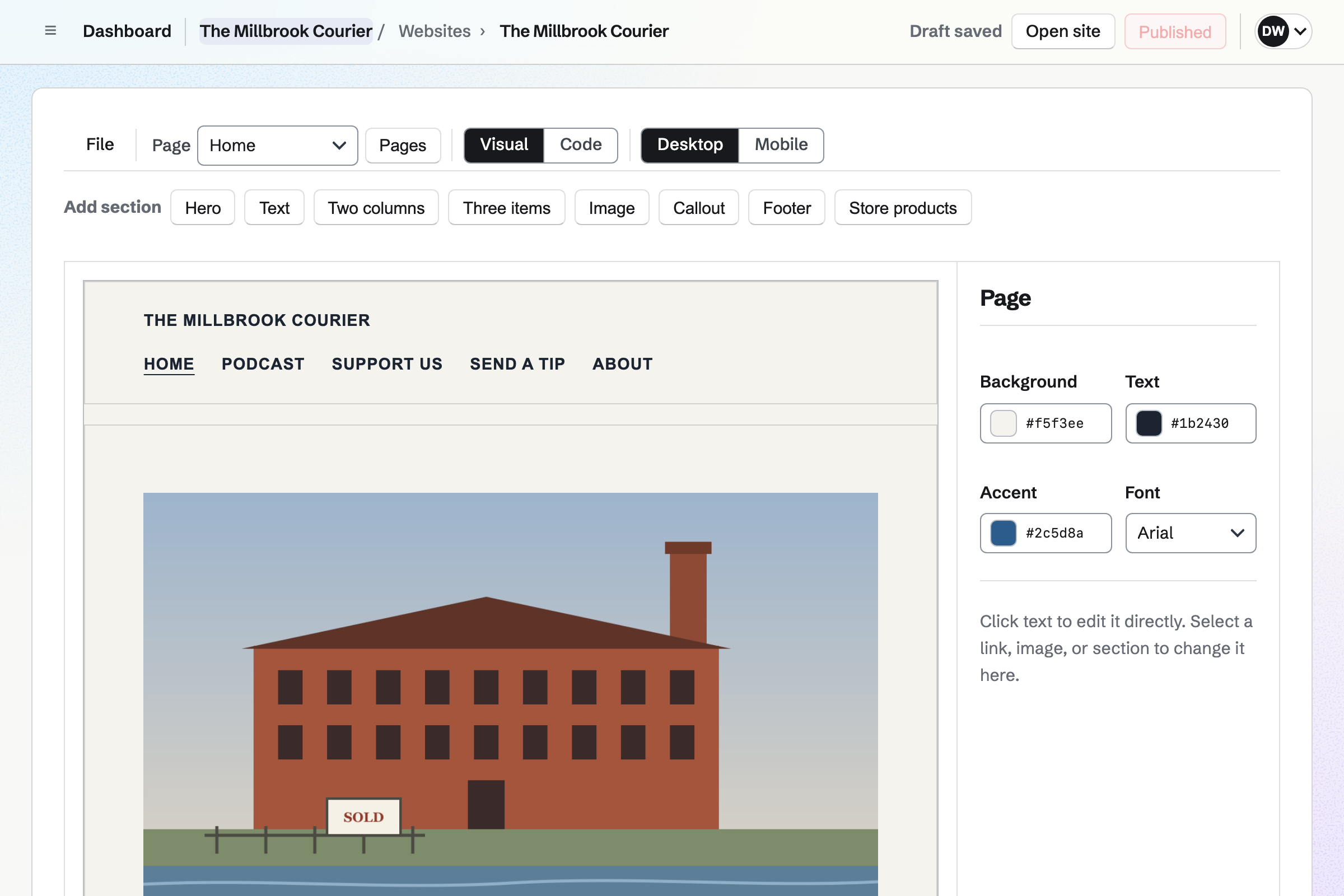
Websites is Magpie's site editor. Your site is built from sections, such as the lead story or a page for tips. You change the words by clicking them.
The site can be at your own domain. A site built from Markdown in a Git repository gets a feed of its stories.
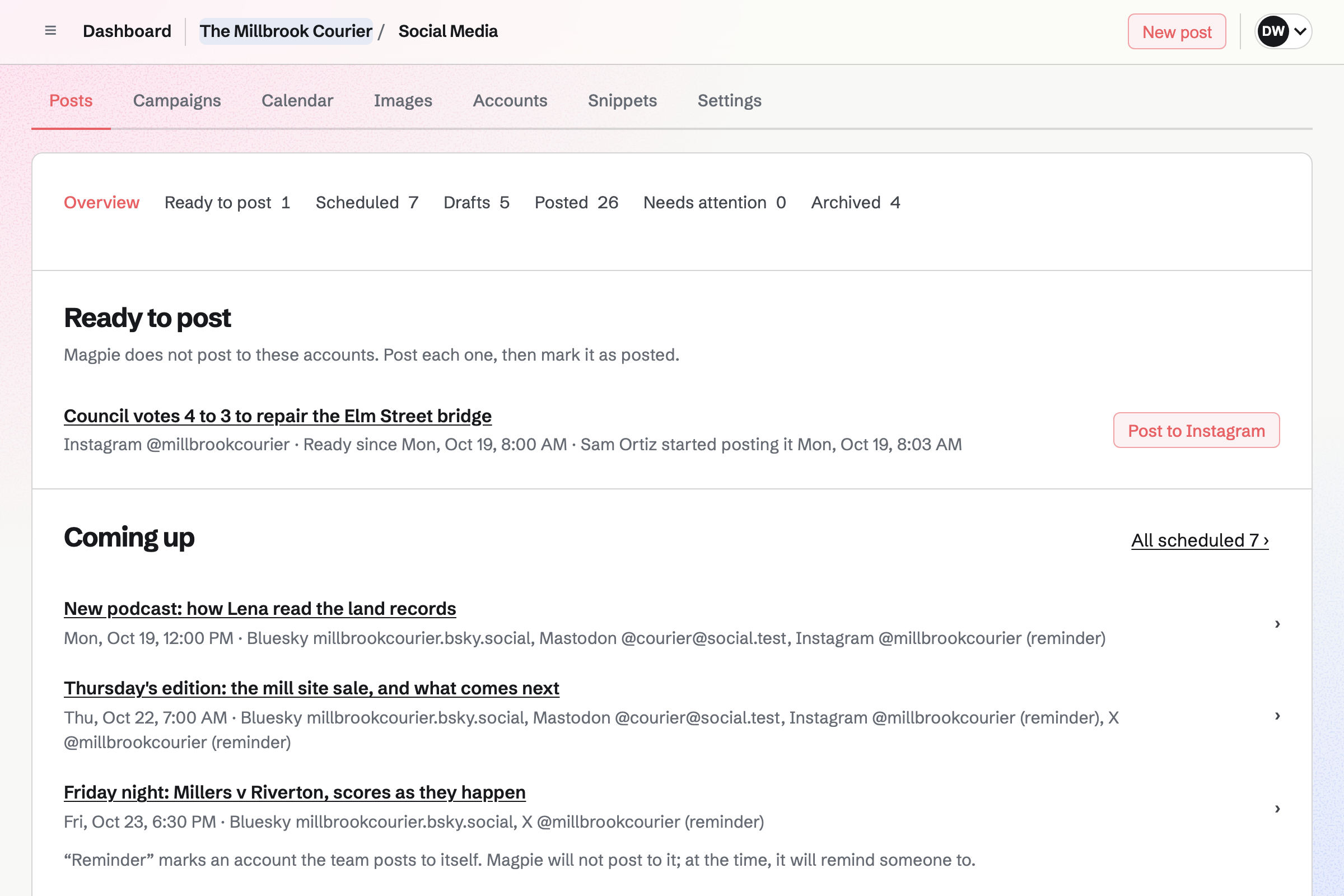
Social Media posts to Bluesky, Mastodon and LinkedIn at their time. For Instagram and X, Magpie reminds a reporter and opens the post filled in.
A campaign holds the posts for one story, from the first report to the hearing. A sent edition's web copy can start a post.
Podcast publishes your show's episodes and its RSS feed. You submit the feed to Apple Podcasts and Spotify once. The show belongs to the account of the person who starts it.
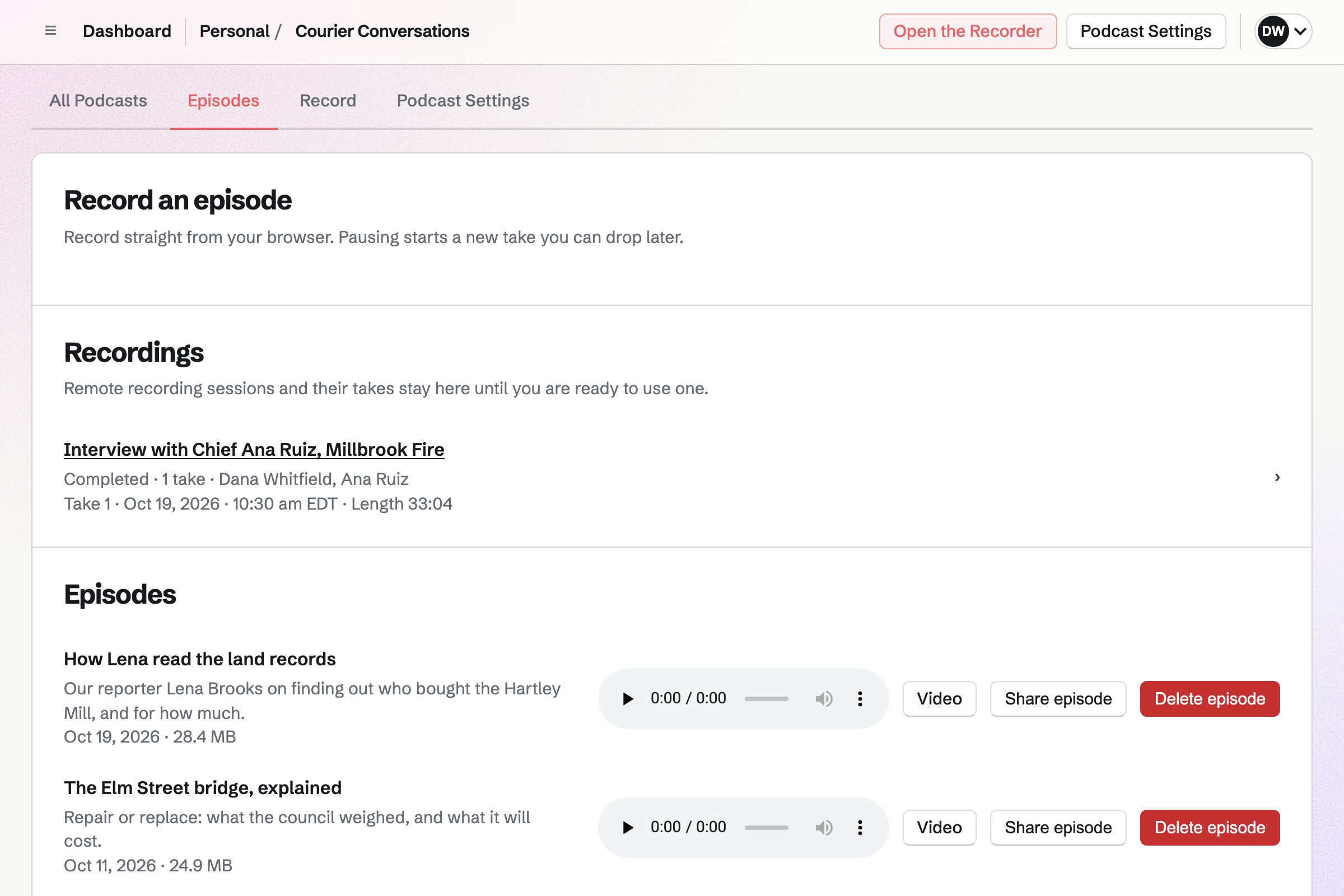
You can record in Magpie, with guests joining from an invite link. You can also upload an MP3. Each episode can become a video, and Share episode starts a social post.
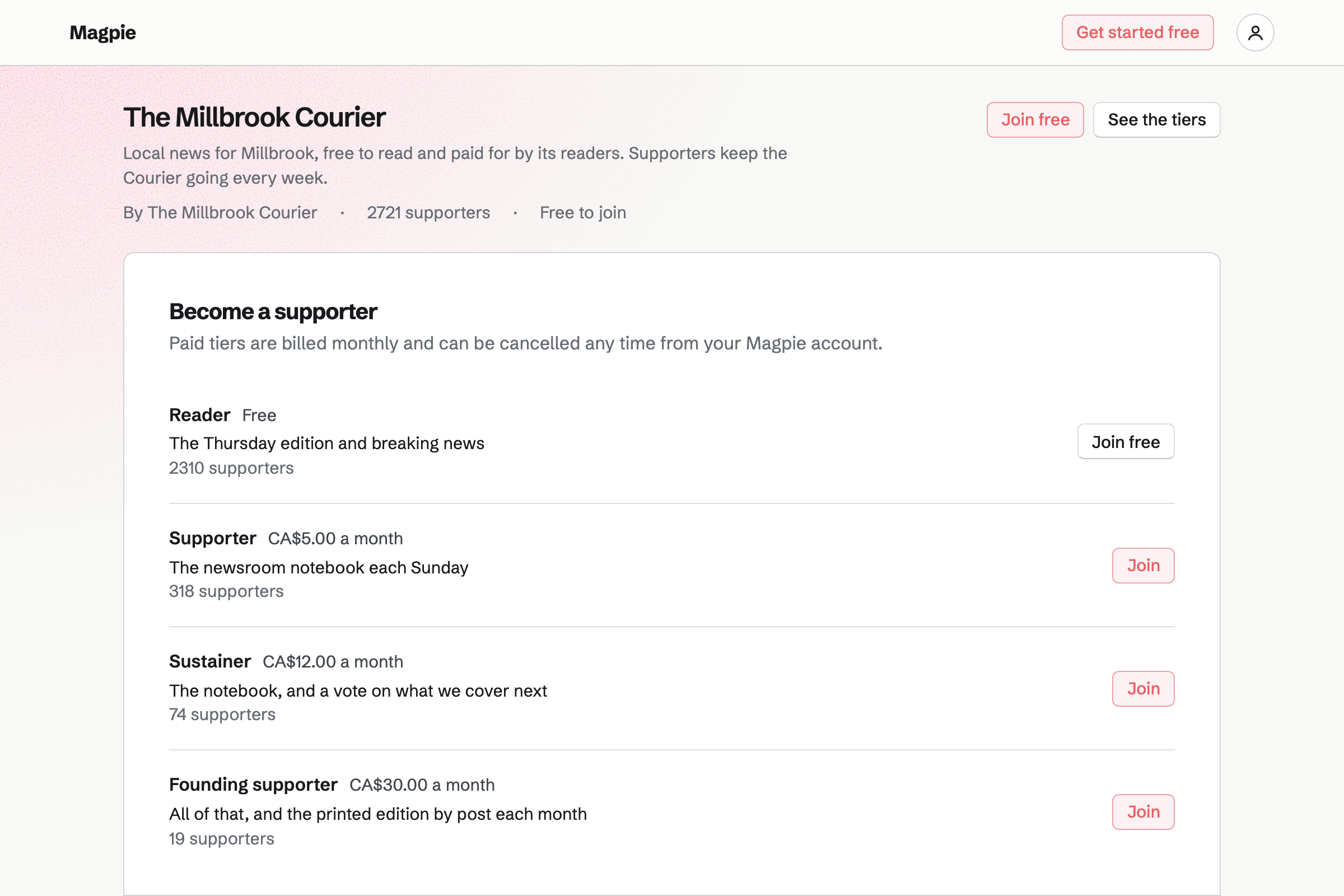
Supporters gives you a public page with a free tier and monthly paid tiers. Supporters pay by card, and the money goes to your own Stripe account.
Posts can go to everyone, or only to paying supporters. A poll lets supporters choose what you cover next.
The story is a card on the board, with its reporter and due date.
The reporter writes it in a document.
You comment and suggest changes, and the reporter accepts them.
The story leads the edition, scheduled for Thursday morning.
Its web copy joins the past editions, and starts a social post.
The reporter talks it through on the podcast.
You name it, describe it and turn on web copies. Help: Start and configure a newsletter.
You share their story with them to review. Help: Share and review a document.
You set your free and monthly tiers. Help: Set up Supporters.
You connect your Stripe account, so readers can pay by card. Help: Connect Stripe to receive money.
A publication with staff fits the Team plan, with each staff member in the team. A freelancer invited to one story joins as a guest and takes no member place.
Magpie's fee on supporters' payments is 3%, and it adds no fee to your shop's sales. Stripe's processing fee is taken from each card payment. Prices are on the Pricing page.
A newsletter writer sends each issue to free and paying readers.
A blogger runs a website and a newsletter at their own domain.
A podcaster records, publishes and grows a show.
A writer or editor takes on commissions and bills for them.
Yes. A story is a document the team can open. You comment on a line or suggest new wording, and the reporter accepts it or not. Named versions keep each draft.
Yes. You share the story with them as Can review. They comment and suggest changes without changing the text. They join as a guest who can open that document and nothing else in the team.
Yes. Newsletter sends each edition now, or at a time you choose. With web copies on, each one also has its own public page, listed with past editions.
Yes. You import a Substack export or a CSV file, or paste addresses one per line. You record how the people agreed to receive it. Anyone who unsubscribed elsewhere is left out.
Yes. Supporters gives you a public page with a free tier and monthly paid tiers. Payments go to your own Stripe account, with Magpie's 3% fee. Posts can be for paying supporters only.
Yes. Podcast publishes your episodes and an RSS feed you submit to Apple Podcasts and Spotify. You record in Magpie with guests, or upload an MP3 of up to 500 MB. The show belongs to the account of the person who starts it.
Yes. A Kanban board can have a column for each stage, from pitched to scheduled. Each story is a card, with its reporter and due date.
Yes. A print issue is a product in your shop, with its own stock. You ship the order, or the buyer collects it. Magpie adds no fee to the sale.
Yes. A public Message Board can be read by anyone. Readers post, reply and vote, and you can remove a post.
Yes. Secure Files encrypts files and their names in your browser before they are stored. A file can be shared by a link that expires, with a passphrase. Secure Files belongs to one person's account.
Yes. Magpie lists the records to add where your domain's DNS is managed. Once they are found, Magpie gets the security certificate itself.
Create a Magpie account and make a team for your publication.