Makers with a shop
A maker with a shop sells at the counter and online, with staff on a rota.
Potters, woodworkers and jewellers
A maker working alone uses Magpie in Personal. A studio with assistants can work in one Magpie team.
Get started free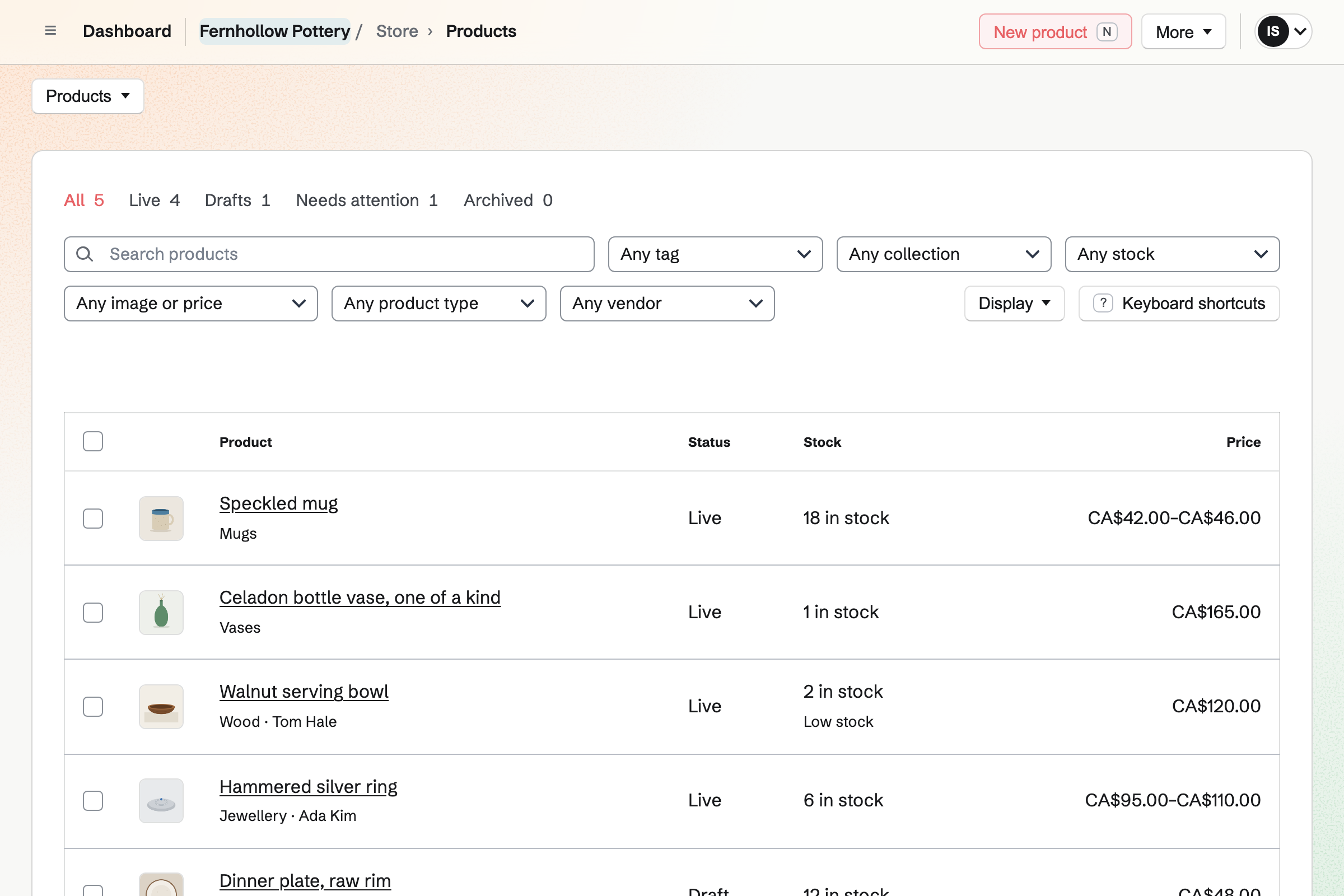
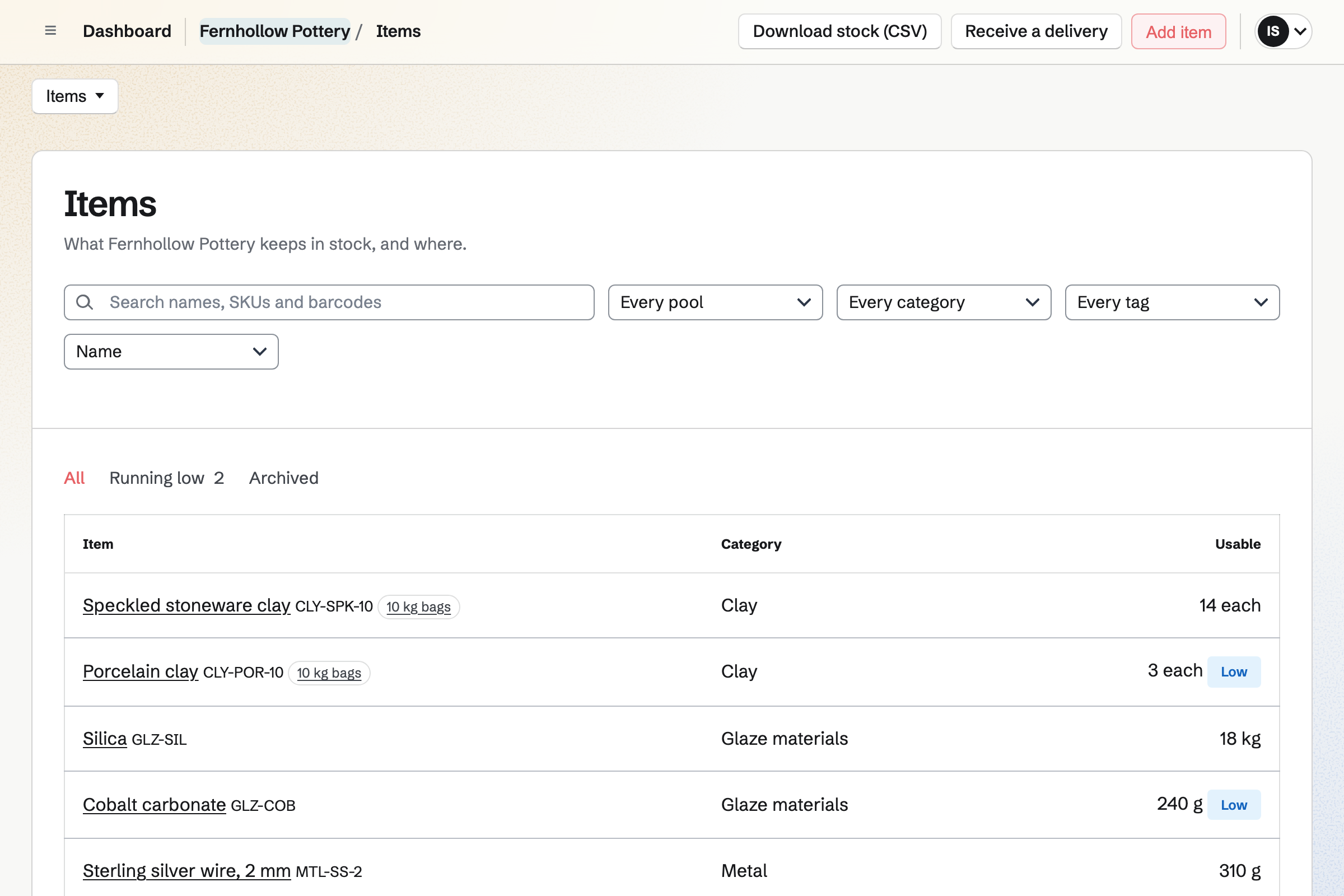
Inventory counts each material in its own unit: bags of clay, grams of silver. Each item shows what is usable and which ones are low.
A purchase order goes to your supplier by email. Receiving it adds the stock at its cost.
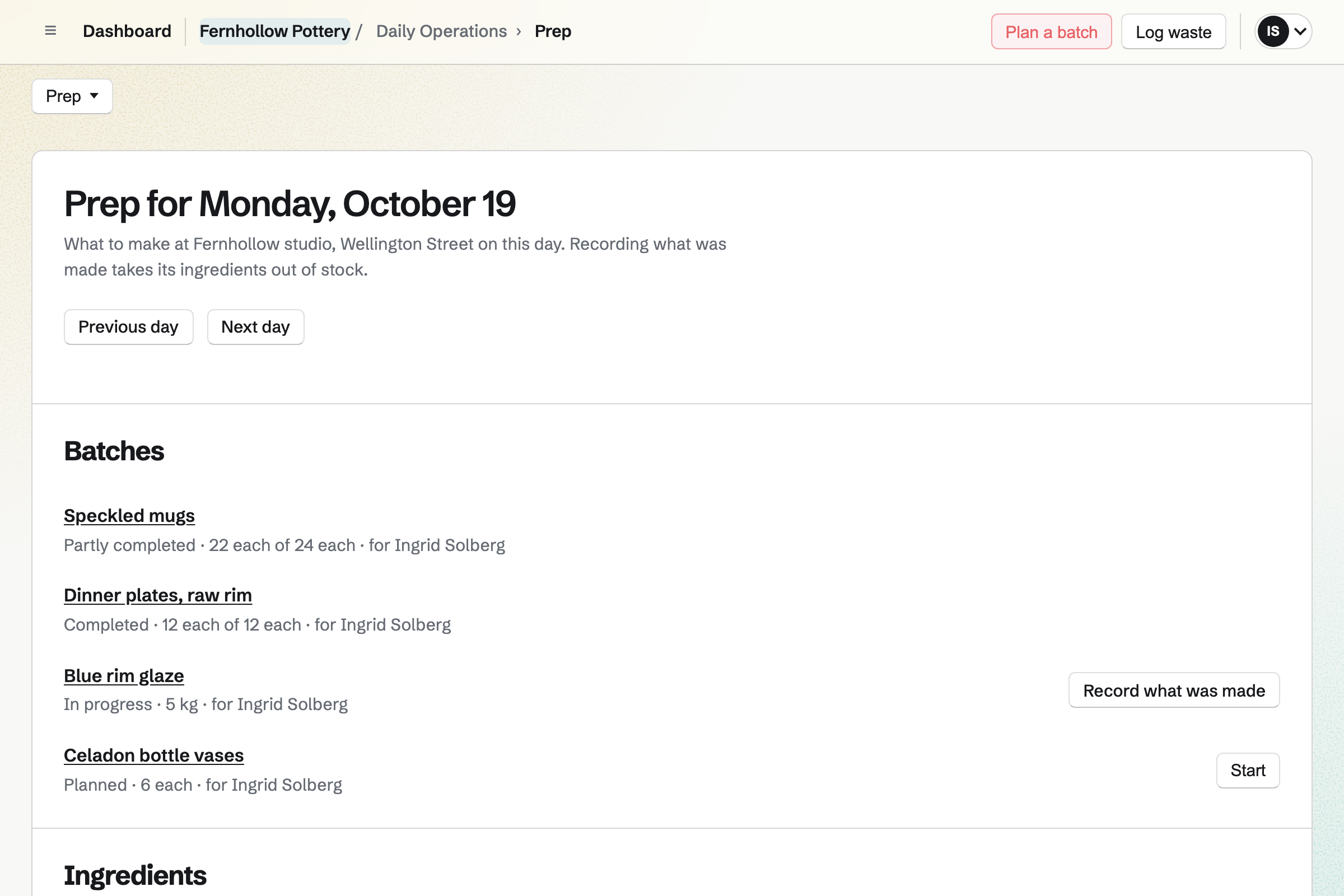
Daily Operations keeps a recipe for each piece you make, such as a mug. A recipe can include another recipe, such as a glaze batch.
Recording what was made takes the materials out of Inventory and adds the finished pieces. A failed batch, such as a cracked firing, is logged as waste.
Store is your online shop. Publish automatically puts each new piece live at the date and time you set. A one-of-a-kind piece is a product with a stock of one.
A set of mugs can come in glazes, each with its own stock. Galleries and shops can buy at their own wholesale prices, once you approve them.
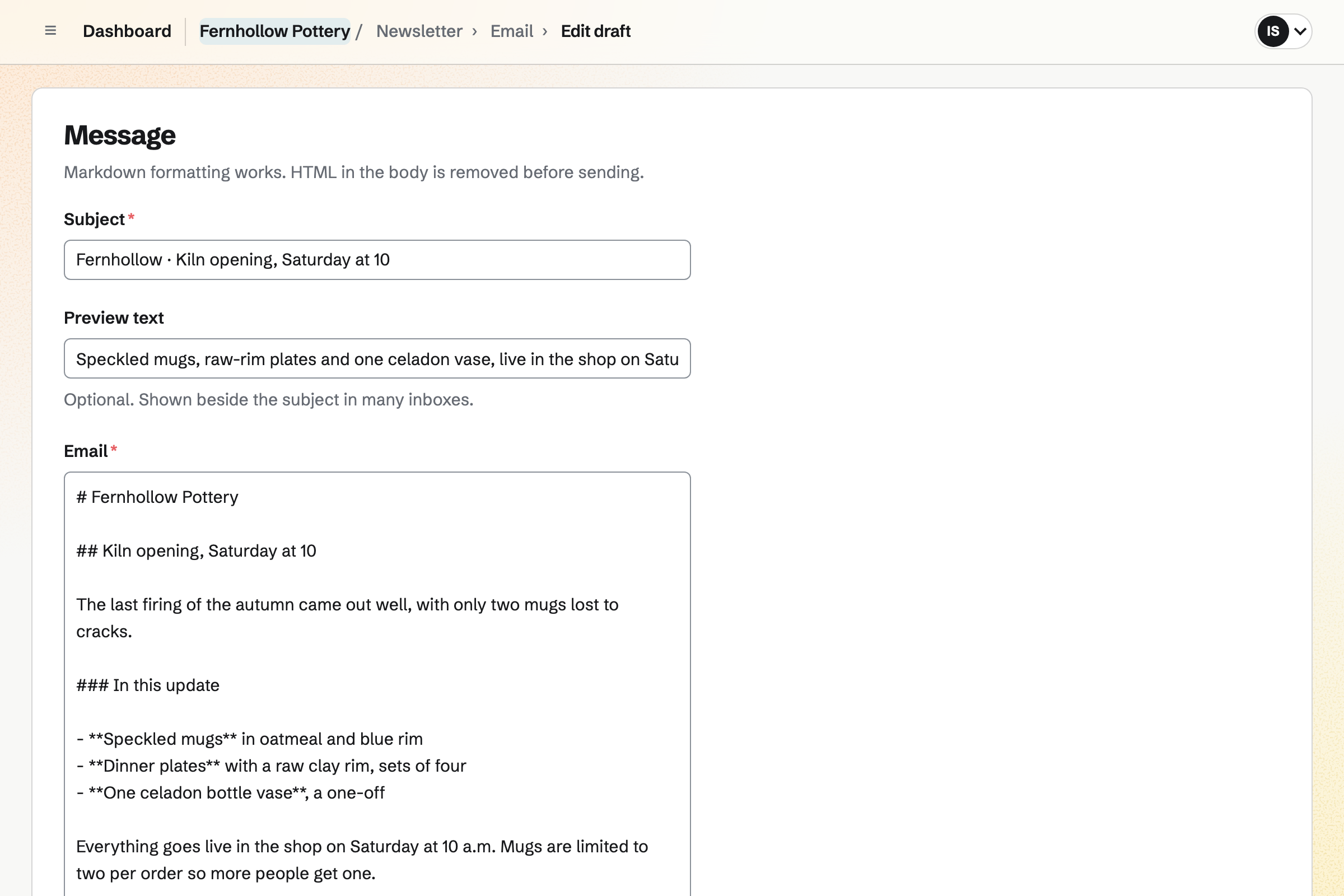
Newsletter gives you a sign-up page with double opt-in, and checkout can ask buyers to subscribe. You write each issue, send yourself a test and schedule it.
A sent issue has a web copy, which can start a social media post. The newsletter's page counts the subscribers and the copies delivered.
Social Media posts to Bluesky, Mastodon and LinkedIn at the time you choose. For Instagram, Magpie reminds you and opens it with the post filled in.
Instagram's square and portrait shapes are cropped around a focal point you set on each photo. Promote on Social Media, on a product, starts a post with its photos.
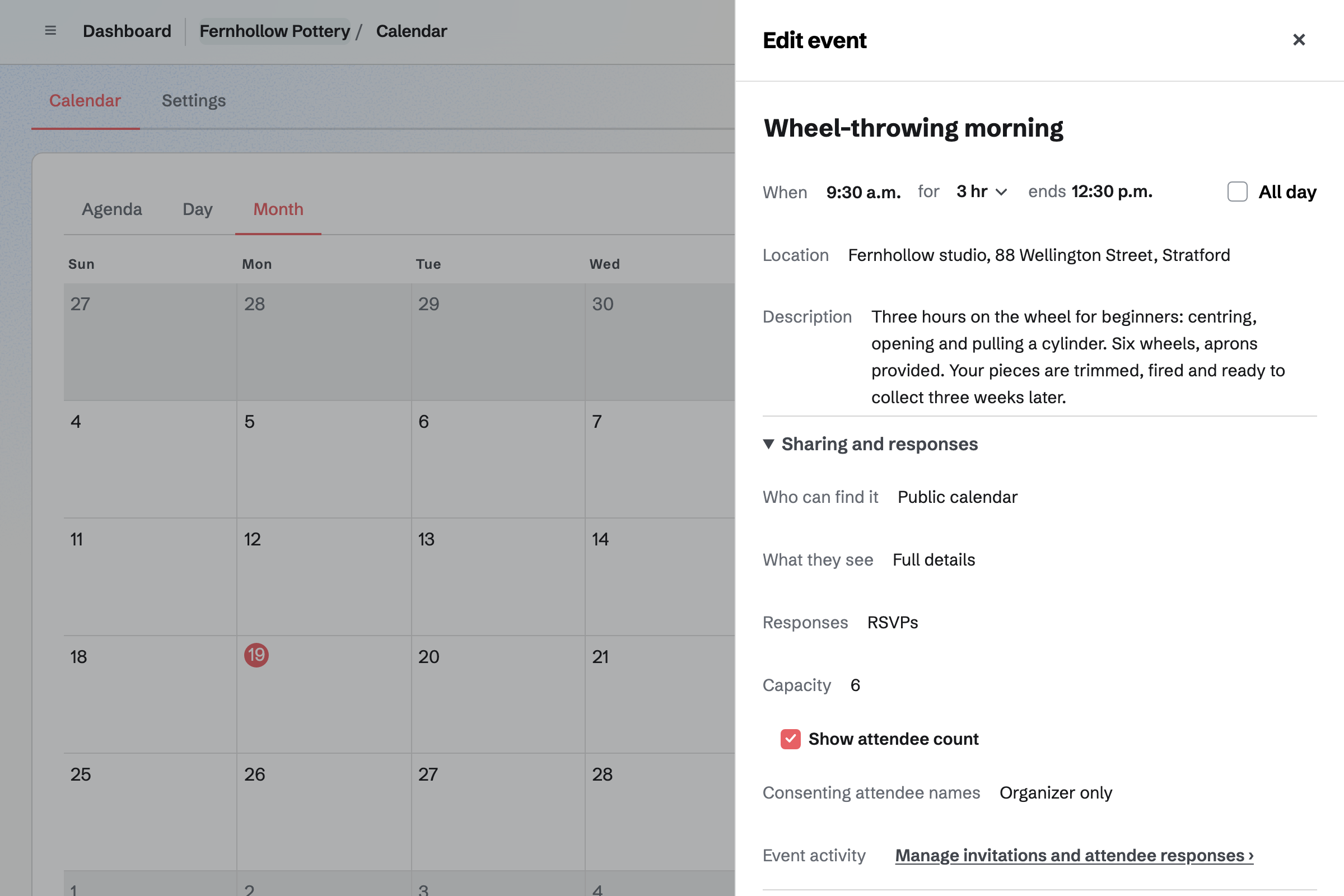
Calendar gives you a public calendar of your workshops and open studios. You turn on RSVPs and set a capacity. The event's page says when it is full.
A paid workshop takes its fee on a Form, which you close when it is full. Sharing an event starts a social media post about it.
Each step changes the stock the next one counts on.
A purchase order brings in clay and glaze materials, at their cost.
You record 24 mugs, which takes the clay and glaze out of stock.
Each mug goes in the shop, set to go live on Saturday at 10.
Your newsletter tells subscribers the time, and a post goes out with the photos.
At 10, the pieces go live, and each one-off sells once.
Each sale reaches your books, with Stripe's fee.
You add your clay, glazes or silver, with their opening stock. Help: Keep track of stock.
You add each thing you make, with the materials it uses. Help: Plan prep, keep recipes and log waste.
You name your shop, add your pieces and publish it. Help: Set up and publish a Store.
You name the newsletter and open its sign-up page. Help: Start and configure a newsletter.
You connect your Stripe account, so buyers can pay by card. Help: Connect Stripe to receive money.
A maker working alone fits Pro, for your own work in Personal. A studio with assistants fits the Team plan, one price for up to 25 members.
Magpie adds no fee to your shop's sales. Stripe's processing fee is taken from each payment. On a paid Form for a workshop, Magpie's fee is 1% of each payment. Prices are on the Pricing page.
A maker with a shop sells at the counter and online, with staff on a rota.
A handmade seller runs a shop of their own beside Etsy.
An artist sells originals and prints, and keeps supporters close.
A small brand sells to shops at wholesale prices, with its own stockists.
Yes. Publish automatically puts a product live at the date and time you choose. A product with no photo stays a draft, and says why.
Yes. A one-off is a product with a stock of one and its own photos. Once it sells, it shows as sold out until you take it down.
Yes. A product has options, such as Glaze, and each choice is an item. Each item has its own price, photos and stock.
Yes. When an item with counted stock sells out, its product page asks for an email address. Magpie sends one email when it can be bought again.
Yes. Each material is an Inventory item in its own unit, such as bags or kilos. Recording a batch takes what it used out of stock. The low ones are listed to reorder.
Yes. Shops ask for wholesale access from your shop, and you approve them. Each sees its own prices and minimums, and can pay at checkout or by invoice.
Yes. You make a Form for the workshop that charges one amount. Each person pays by card on Stripe's page. You close the Form when the wheels are full. Magpie's fee on a paid Form is 1% of each payment.
Yes. Supporters gives you a public page where people join free or pay monthly. You post updates, photos and short videos for everyone or only for paying supporters. Magpie's fee on supporters' payments is 3%.
You choose New order, pick the pieces and record how the buyer paid. The order is created paid, and the pieces leave stock.
Magpie adds no fee to your shop's sales. Stripe's processing fee is taken from each card payment. The rest goes to your own Stripe account.
Create a Magpie account and add your first piece.