Bookshops
A bookshop sells new books online and at the till, and runs author events.
Music shops
The shop, its teachers and its repair bench work in one Magpie team.
Get started free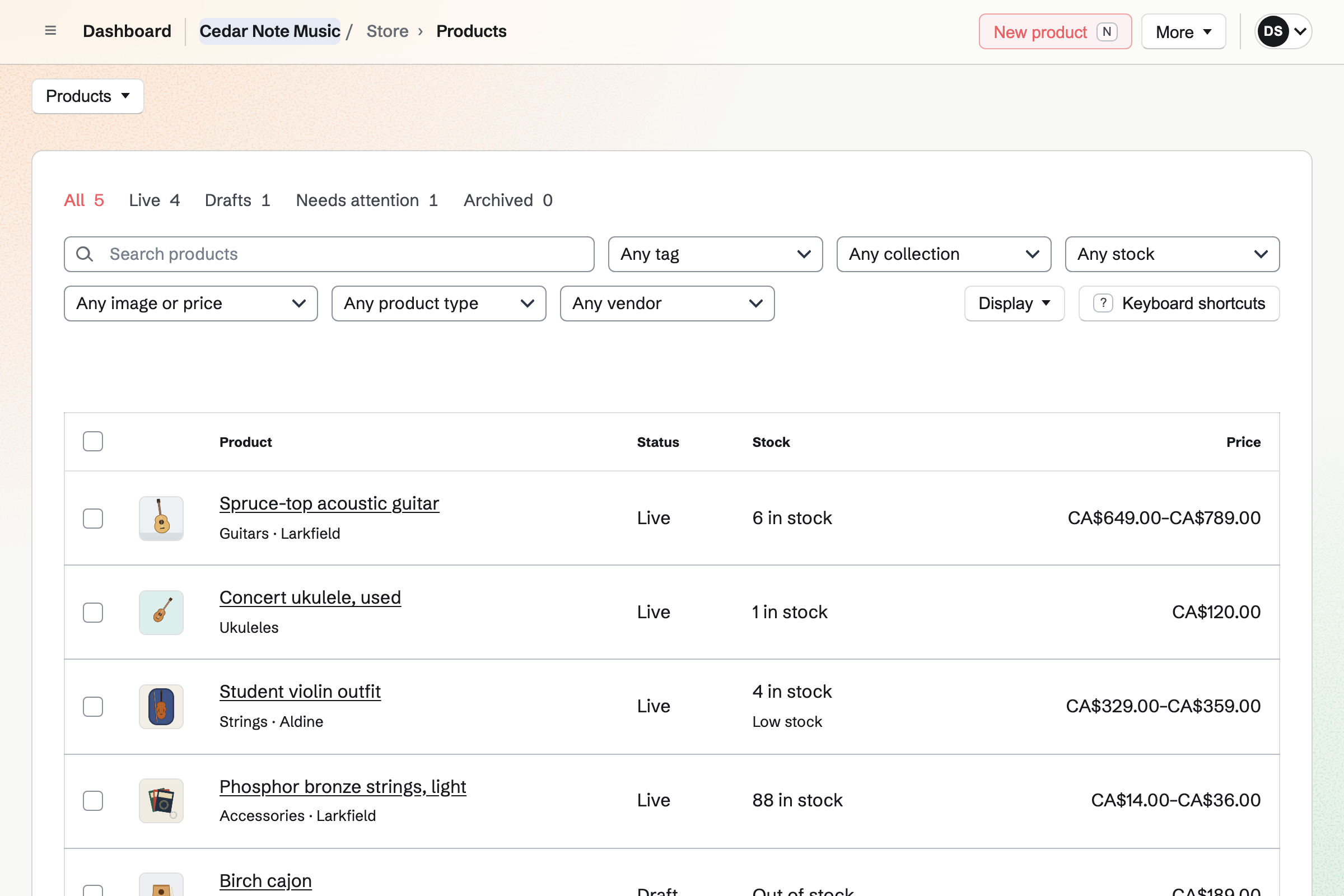
Store is the shop's online shop. A product can come in sizes and finishes, each with its own stock, SKU and barcode. A used instrument is a product with a stock of one.
A sale at the counter is recorded as an order, so the stock stays right. Online orders can be picked up at the shop.
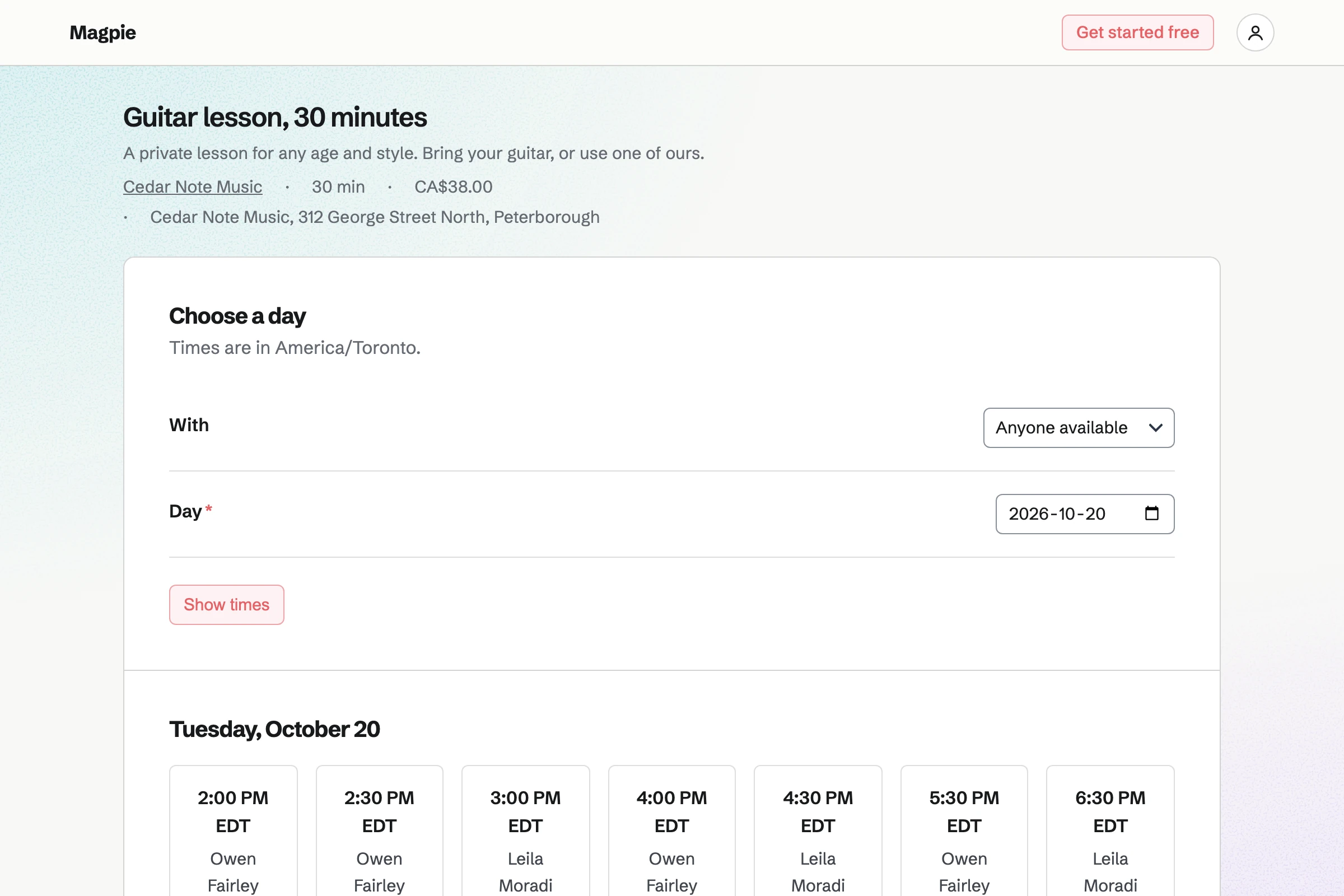
Appointments gives the shop a booking page. Each service has a length and price, such as a 30-minute guitar lesson. Customers choose a teacher and a free time.
Each teacher's weekly hours set the times on offer. A lesson room can be required too. The confirmation lets the customer reschedule or cancel.
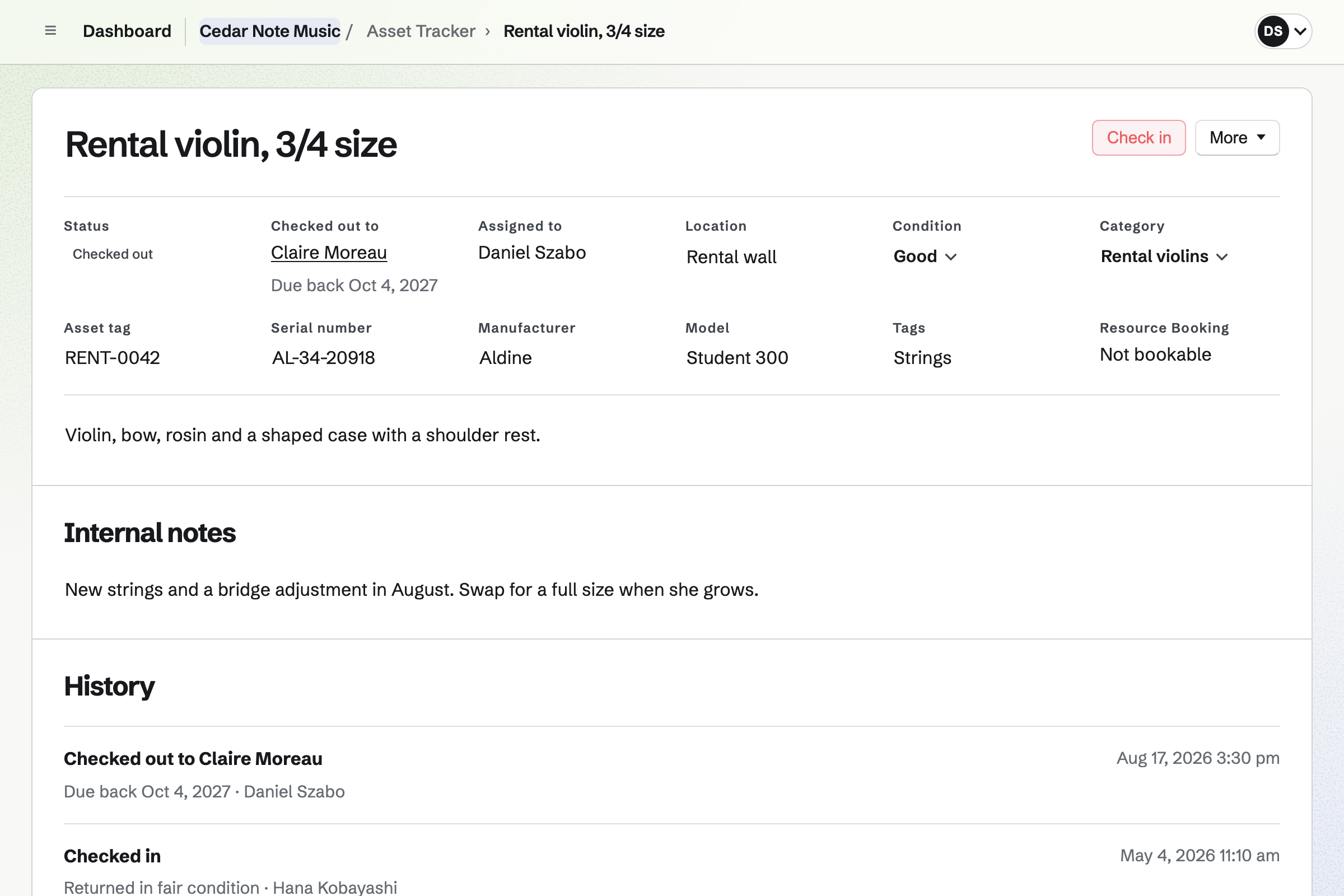
Asset Tracker lists every rental instrument, with its tag, serial number and condition. You check one out to the family's contact, with a due-back date.
Overdue lists the instruments not yet returned. At check-in, you record the condition. A crack or a missing bow stays in its history.
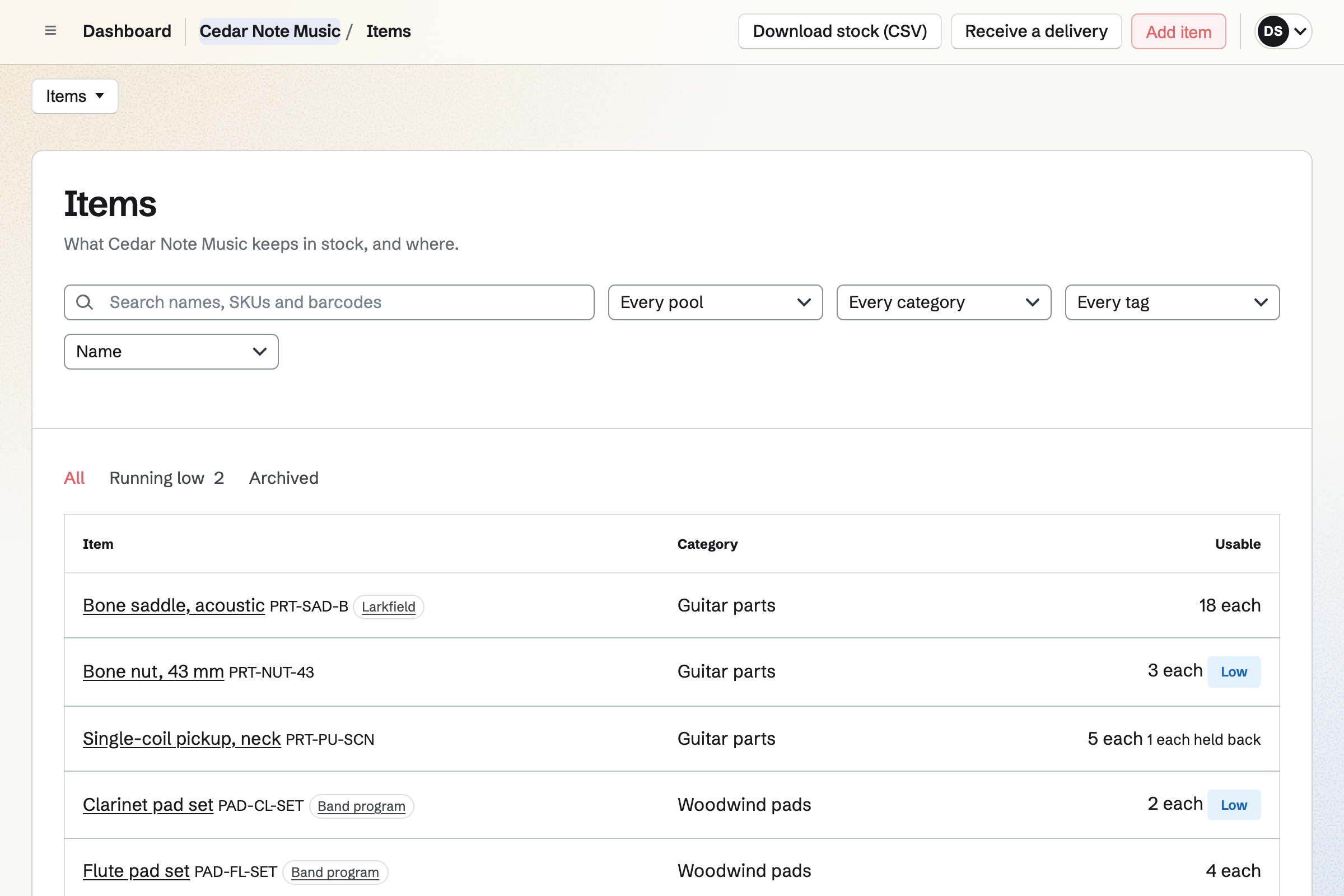
Inventory keeps the parts you fit at the bench, such as pads, frets, saddles and pickups. Each part shows how many are usable, and which ones are low.
You take parts out with a reason and a note, such as the repair. A purchase order to a supplier brings them back up when it is received.
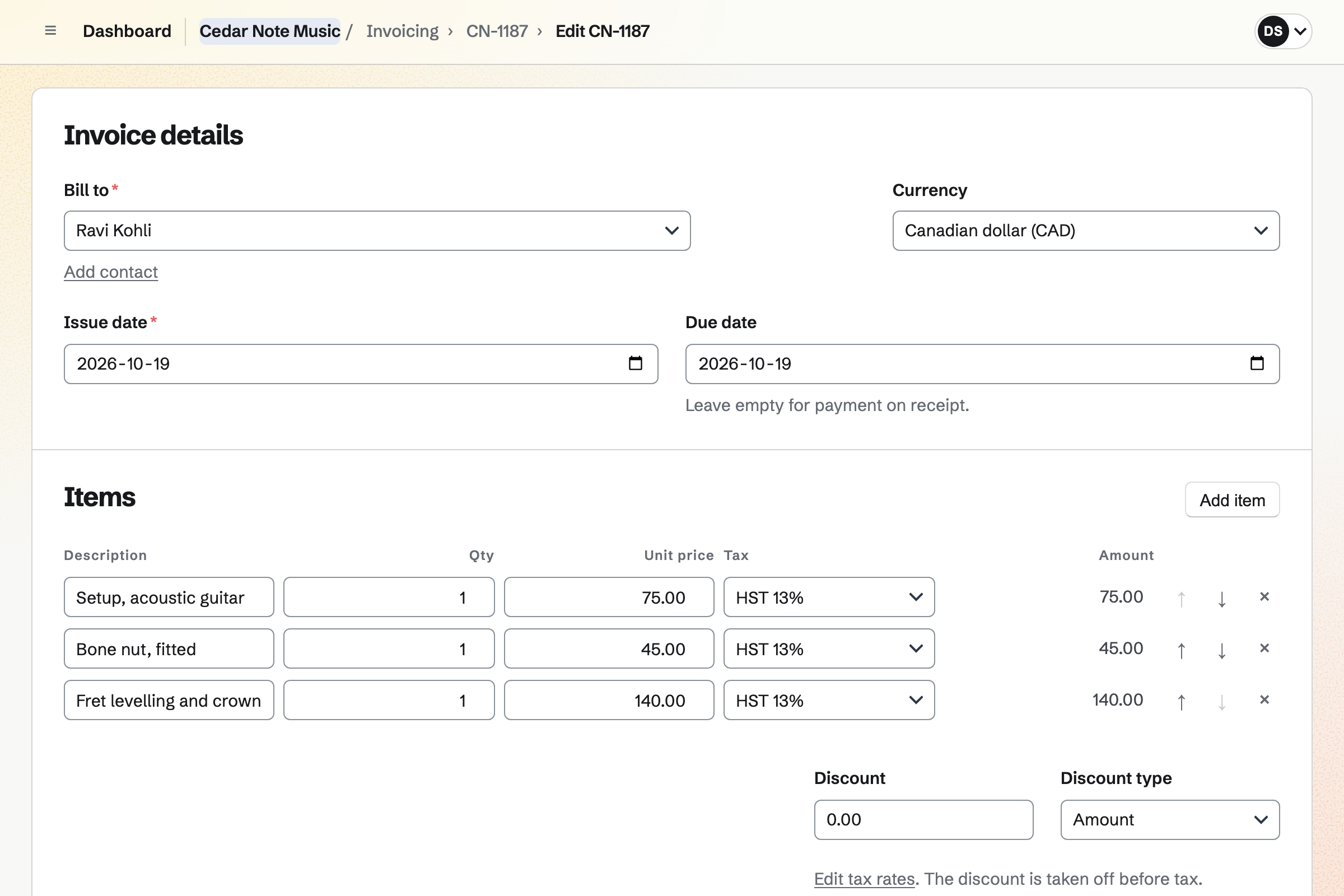
Invoicing bills each repair or setup with its labour and parts. The invoice's note can tell the customer the instrument is ready to collect.
Monthly lessons and rentals are recurring invoices, issued on their date. Customers pay by card into the shop's own Stripe account, with no Magpie fee.
Contacts keeps a page for each customer or family. A pinned note holds an instrument's make and serial number. Their lessons, repairs and invoices appear in its history.
A follow-up sets the day to call, such as when a part arrives for a repair. The follow-ups list shows what is overdue, due today and coming up.
Every rental, lesson and repair is on the family's contact.
A family rents a violin, checked out to their contact.
A recurring invoice bills the rental each month.
The student books lessons with a teacher on the booking page.
Strings and rosin are ordered online and picked up at the shop.
A loose seam is booked in as a drop-off, and the parts come out of stock.
The repair is billed with its parts, and paid by card.
The family answers Going to the recital on the shop's calendar.
You add instruments and accessories, with their sizes, finishes and stock. Help: Create products, options, and inventory.
You add lessons and repair drop-offs, and the teachers' hours. Help: Set up Appointments.
You add each rental instrument with its tag and serial number. Help: Track individual assets.
You add the parts you keep at the bench, with their opening stock. Help: Keep track of stock.
You connect your Stripe account, so customers can pay by card. Help: Connect Stripe to receive money.
A shop with staff fits the Team plan, one price for up to 25 members. Bookings are unlimited on every plan.
On the free plan, you can create 5 invoices a month.
Magpie adds no fee to online sales or invoice payments. Stripe's processing fee is taken from each card payment. Prices are on the Pricing page.
A bookshop sells new books online and at the till, and runs author events.
A musician sells music and merch, and books gigs.
A music teacher on their own books lessons and bills every month.
A repair shop books drop-offs and bills each job when it is ready.
A recording studio books sessions in its rooms, by the hour.
Yes. Your booking page lists each lesson with its length and price. The student chooses a teacher and a free time. They need only a name and an email address, and a phone number if they like.
Yes. Each instrument is an asset with a tag, a serial number and a condition. You check it out to the family's contact with a due-back date. Overdue lists the late ones, and check-in records the condition.
Yes. A recurring invoice repeats its lines each month and is emailed on its date. A family can also sign a proposal with monthly lines. Each invoice can then be charged to their saved card.
Yes. A short service, such as a ten-minute drop-off, goes on your booking page. You look at the instrument with them and agree the work.
Yes. The invoice has a line for the labour and one for each part. You take the parts out of Inventory with a note of the repair. The invoice's note can say the instrument is ready.
Yes. It is a product with a stock of one and its own photos. Its condition goes in the description. Once it sells, it shows as sold out until you take it down.
Yes. New order records a counter sale with how it was paid, and the stock goes down.
Yes. Sell when out of stock lets customers order it now, with an expected ship date. They pay when they order. A Pre-orders tab lists those orders until the stock arrives.
Yes. A public calendar event takes Going or Not going, up to a capacity you set. The event's page says when it is full. Your calendar has a public page that lists your events.
Yes. A gift card sells fixed amounts online. The buyer can have it emailed to someone on a date they choose. It pays for anything in your online shop.
Magpie adds no fee to online sales or invoice payments. Stripe's processing fee is taken from each card payment. The rest goes to the shop's own Stripe account.
Create a Magpie account and add your first products.